ABSTRACT This article describes the dynamics that led the CDEC to engage with schools and to define its educational program during its first 50 years of activity. In its early phase, this took the form of self-education among young members of the Federazione Giovani Ebrei Italiani (FGEI; Jewish Youth Federation of Italy) within the Resistance and an antifascist paradigm. From the 1970s onward, its contribution to education on the memory of deportation and the Resistance developed from a perspective that diverged from that of the Istituti storici per la Resistenza (Institutes for the History of the Resistance). With the publication of deportees’ testimonies and survivors’ visits to schools, however, a unified view of the struggle for Liberation and of the victims of Nazism-Fascism persisted. In the late 1980s, historical research began to challenge these approaches. In the 1990s, amid renewed scholarly work on deportation and in response to a new wave of antisemitism and denialism, the CDEC began to devote itself to educational work in a more structured way. With the transition from the First to the Second Republic, attention to the Resistance declined. The paradigm shift was marked by the establishment of Holocaust Remembrance Day. Pedagogical reflection identified Auschwitz as an anthropological watershed. Subsequently, two developments defined new educational challenges: the establishment of museums and memorials in Italy and widespread access to the internet.
Tag: Memory
ABSTRACT This article retraces the research path that led to a series of studies on the persecution, survival, and resistance of Jews in Italy between 1943 and 1945 that were carried out at the CDEC Foundation in Milan. Through a personal account of projects such as Il libro della memoria, L’alba ci colse come un tradimento, Salvarsi, and the digital initiative “Resistenti ebrei d’Italia,” Liliana Picciotto reflects on the sources, methods, and historiographical questions that shaped this work. Particular attention is devoted to the recent research on Jewish participation in the Italian Resistance, a subject long marginal in both scholarship and public memory.
ABSTRACT
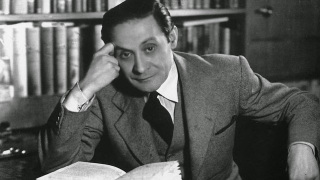
Inspired by the discovery of a letter written by a Spanish woman under the pseudonym of Marcelina de Quinto to Isaac Molho, editor of the Tesoro de los judíos sefardíes (Treasure of the Sephardic Jews), this article focuses on the persistence of memory of Jewish ancestry within a prominent family of Spanish intellectuals in the 20th century—the Jardiels—and its reenactment in two different generational contexts. While the literary oeuvre of Enrique Jardiel Poncela, one of the most important comic writers of twentieth-century Spain and a staunch supporter of Franco, is tainted by a resolute antisemitic bent, his daughter Evangelina, a psychologist and author of fictional books and journalistic essays, converted to Judaism and strongly identified with the struggles of the State of Israel. Through the analysis of the biographical and intellectual trajectories of these two individuals, the article casts light upon the stereotypes, contradictions and ambivalent attitudes of Spanish intellectuals regarding Jews and Judaism.
ABSTRACT
This essay focuses on the “Sephardic Portraits” of Daniel Quintero (Málaga 1949-), a leading Spanish figurative painter. In these paintings, composed over the last twenty-five years, Quintero portrays contemporary Sephardi figures alongside medieval and early modern Iberian Sephardi Jews. To provide a face to these historical figures (Maimonides, Samuel Halevi, Benjamin of Tudela, Gracia Mendes) Quintero finds inspiration in contemporary Spaniards. Alongside these portraits, a group of still lifes connect the past and present of Jewish Spain. Seen through the methodology of “curatorial dreaming” proposed by Shelley Ruth Butler and Erica Lehrer, these portraits and still lifes construct a genealogy and perform a particular cultural memory. They establish a relationship between a past that remains in the faces, gazes and gestures of those who forgot it and a present that works to make those traces visible through a re-engagement with the memory of Jewish Spain.