


Introduction
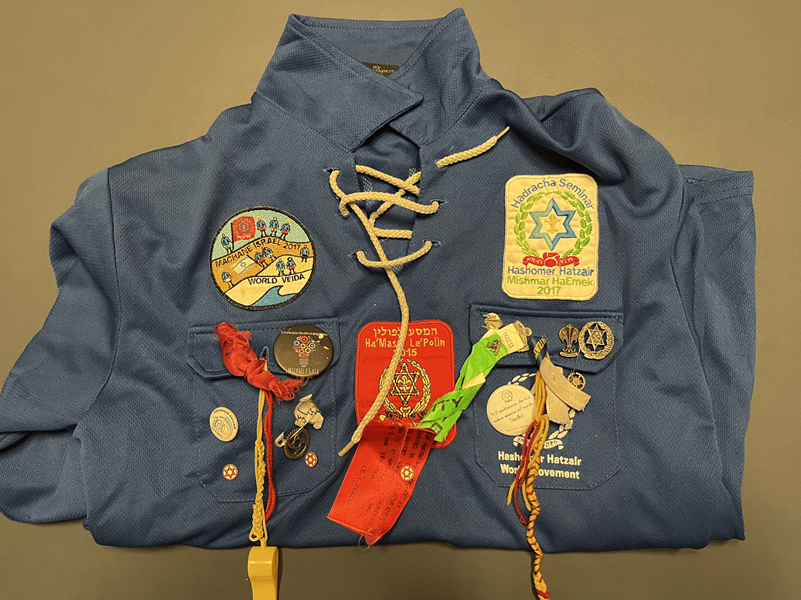
A summer evening bonfire with communal singing accompanied by a guitar, riqudei ‘am (folk dances)1 in a green field, a vigorous discussion about Ber Borochov’s socialism and its application in the Kibbutz Movement,2 the wearing of the hultzah shomrit (the characteristic blue shirt with a single white lace, Fig. 1), which has been worn by thousands of individuals, or a Pesah seder attended by more than one hundred people. These are just a few of the vivid images that may come to mind for those who are or have been members of Hashomer Hatzair. The present work aims to describe the collection project entitled “Questa è la storia…di un gran Movimento” undertaken by the CDEC Foundation, which led to the first archival collection relating to the Hashomer Hatzair movement in Italy. It will identify its peculiarities, main subjects, and research lines, as well as its inherent possibilities for researchers, future projects, and challenges. I will analyze the material available in the CDEC Foundation Archives, intertwining my knowledge with the literature on the subject, information gathered in other similar archival collections, and anecdotes from my own experience.
It is important that I specify my positionality: I am a modern history scholar, and I have been an active member of the Milanese branch of Hashomer Hatzair Italy for almost fifteen years. I have been part of the movement for the majority of my life, entering the Milanese ken (local branch, literally “nest”) when I was ten years old and “officially” leaving the position of shaliah (emissary) at the age of twenty-six, when I started my PhD. For this reason, I recall many more evocative moments: eating with two hundred people from all over Italy in a dining room built of wooden poles and cords; driving to the Polish-Ukrainian border to bring necessities collected by volunteers for war refugees hosted in a Hashomer Hatzair-run kindergarten; the commemorative mifqad (ceremony) for Yitzhak Rabin’s funeral held in the dim candlelight in the movement’s Milan base (ken). And while on the one hand, my involvement gives me a particular privileged and immersive standpoint when analyzing this archival project, on the other, my emotional engagement with the subject may affect my objectivity and academic distance.
In this article, I will focus on answering these leading research questions: What can we learn about Hashomer Hatzair Italy from this collection? What new insights might these collections offer within the panorama of Jewish studies? To address these questions, I will first briefly examine the movement’s ideological structure and the debate over its origins and historical characteristics in Italy. Then, I will delineate the history of the fund’s collection, its peculiar structures, and the primary subjects relevant to the history of Hashomer Hatzair Italy. As a result, this article will serve as a guide to diving into the collection’s language, symbols, and key historical aspects.
The title of this article alludes to the opening line of a song commonly performed within Hashomer Hatzair Italy (“This is the story…of a great movement”)[3], and it will resonate with anyone who has ever attended a Hashomer Hatzair Italy summer or winter camp. For exactly this reason, the CDEC’s project to produce an archive for Hashomer Hatzair Italy, inaugurated in October 2022, was named after it.
A “Great Movement”: The Ideological Pillars of Hashomer Hatzair
As a grassroots youth movement active all around the globe, Hashomer Hatzair’s ideology is multifaceted and has undergone many changes over time. It was founded in 1913 in Polish Galicia from a union of the Hashomer scout movement and the Tzeirei Tzion study group, as an answer to antisemitism, assimilationism, and right-wing Zionism. Over time, it expanded to many areas of the world, and today it has branches in Europe, North and South America, South Africa, and Australia, with its central headquarters in Israel. Originally, it operated a synthesis between Marxist socialism, Zionism, the idea of a Jewish revival, and the creation of new Jewish men through Scoutism.4 Over time, its ideological system came to encompass the values of collectivism, egalitarianism, social activism, informal education, and pioneerism, being profoundly influenced by figures such as Ber Borochov, Rosa Luxemburg, Martin Buber, David Gordon, Baden Powell, Gustav Wyneken, and Bertha Pappenheim.5
The three main pillars in the movement’s historical development were socialism, Zionism, and Scoutism, while in modern times, new values have come to define its practices. Most importantly, a new pillar, Judaism, was integrated into its ideology—replacing Scoutism—during the 2008 ve’idah (ideological congress) in Holit, a kibbutz in the south of Israel.6 Its profound impact on Jewish youth, besides its ideological system and its structure, may be explained through the importance of the concept of hagshamah (self-fulfillment). The interpretation of this concept has varied over time, originally being strictly connected to the idea of making ‘aliyah to a shomeric kibbutz, while evolving to encompass other options after the 2008 congress. The trajectory of Hashomer Hatzair has been further defined by the institutional nexus between its worldwide branches, MAPAM, and Kibbutz Ha’artzi, establishing a multidirectional flow of ideological and operational influence across the movement’s global network.7 Nowadays, the Hashomer Hatzair World Movement is separated from the Hashomer Hatzair Israeli Movement. Both movements have a centralized structure where every local branch maintains its connection with the movement through a shaliah, which supervises its activities and delivers the ideological formation to every member in the local branch, or ken.
“This Is the Story…”? The Debate on the Origins of Hashomer Hatzair in Italy
Like almost all the Italian members of Hashomer Hatzair, growing up within the movement I was well aware of the core principles and formative milestones that shaped its identity, particularly the Warsaw Ghetto Uprising and resistance during the Second World War, the social struggles that Hashomer Hatzair supported around the globe, and the desire to create a utopian socialist society through the kibbutzim.8 However, when the discourse stumbled onto the history and origins of the Italian movement, the answer was a vague “after WWII.” This does not mean that we never heard versions of the story from speakers from all over Italy, all of whom proudly claimed to have had some involvement in inaugurating Hashomer Hatzair in our country. This contributed to uncertainty regarding the Italian movement’s past, which persists to this day. Indeed, the CDEC Foundation Archives’ records on the subject reveal that in recent decades, the only consistently commemorated anniversary was the 2013 centenary of the movement’s foundation in Polish Galicia. This stands in contrast to sporadic Italian celebrations, such as the thirty-fifth and fiftieth anniversaries of Hashomer Hatzair Italy (1981, 1996)9 and the twentieth anniversary of the Milan ken (1988), with the latter being documented in a special edition of Daf Haken.10
The debate about the origins of Hashomer Hatzair in Italy is closely tied to the very definition of Hashomer Hatzair Italy. While there are many scholarly works about Hashomer Hatzair worldwide, writing about Hashomer Hatzair in Italy is a challenge that has rarely been taken up by historians.11 It means entering a world of symbols, experiences, emotions, specific languages, groups, and individual people with their private relations, ideology, and historical knowledge.
Attempting to answer the when and how of Hashomer Hatzair Italy allows the researcher to offer a new perspective on the post-WWII Jewish Italian communities, their connection to Zionist movements, the hakhsharot,[12] displaced persons (DP) within camps, and the Jewish Brigade. All these experiences have already been aptly analyzed by scholars such as Guri Schwarz, Marcella Simoni, Arturo Marzano, Chiara Renzo, and Stefano Scaletta.13In this sense, these topics cover one of the CDEC Foundation’s main fields of historical interest, directly intertwined with collections such as those on the Federazione Giovanile Ebraica d’Italia (FGEI), the Associazione Donne Ebree d’Italia(ADEI), the Emanuele Cohenca collection, the Comunità Ebraica di Milano (CEM), or the new Rav Schaumann collection. Here, I intend to focus on a specific debate regarding Hashomer Hatzair Italy to demonstrate its cruciality for the CDEC Foundation and Jewish studies in Italy.
The term “Hashomer Hatzair Italy” encompasses various branches, a characteristic that represents a distinctive feature of the Italian movement.14 Nowadays, there are kenim (plural of ken) that have operating continuously in Rome (Yad Mordechai), Milan (Holit-Andrea), Turin (Degania), and Florence (Nirim),15 with two shlihim (emissaries) sent from Israel,16 one dealing with the north of Italy and the other with the center-south. From personal recollections, we can certainly claim that Hashomer Hatzair has been continuously active in these four cities since the 1950s or 1960s. Other branches, such as those in Venice (Merchavia), Genoa, or Trieste,17 were created in the golden decades of Hashomer Hatzair Italy (the 70s and 80s), but did not last.18 However, the present-day structure of the youth movement was developed in the 1960s.[19]
There are two main versions of how and when Hashomer Hatzair arrived in Italy. One perspective suggests that the movement emerged directly after the Second World War, with the formation of Hashomer Hatzair’s hakhsharot, or with the presence of Hashomer Hatzair’s shlihim in DP camps, often identifying the year of the official foundation of Hashomer Hatzair Italy in 1954, as end of this constitutional process.20 The other posits that the official foundation of Hashomer Hatzair Italy dates to the late 1950s in Rome and the late 1960s in Milan.
According to Giuseppe Tedesco’s memoirs, in 1947, in the DP camp of Avigliana, near Turin, Shlomo Cahana,21 known as Silika, a Romanian Jew, and Avraham Przysuskier, from the Negba kibbutz, both of whom were enrolled in the British army, introduced Hashomer Hatzair’s education and ideology, based on socialism and ‘aliyah to shomeric kibbutzim, to DP youngsters in the camp.22 As Simoni stresses, Cahana and his legacy strongly influenced the Tzofim (Scouts),23 founded in 1944 immediately after the liberation of Rome,24 involving young Italian Jews and young Jewish refugees from across Europe with the assistance of Jewish soldiers from the British Army.25 The Jewish Brigade’s26 enthusiastic support for the formation of the GEEDI (Giovani Esploratori Ebrei d’Italia), the Italian Jewish Scouting movement, or Tzofim,27 is described by Edda Schwarz in an interview preserved in the CDEC Foundation Archives, when she recalls the sense of newness, after the racial laws, of singing songs in Hebrew or attending Zionist camps.
In this sense, Hashomer Hatzair’s activities in Italy can be traced through the presence of many Jewish soldiers or other volunteers in Italy who held the role of shlihim sent from the Yishuv28 to encourage ‘aliyah among young people, originating what Simoni refers to as “Generation ’48,” the first Italians in post-WWII Italy to migrate to Palestine. The shlihim came from different movements in the Yishuv, but were active in Italy within the framework of the Hehalutz (“Pioneer”) umbrella organization,29 which encompassed all ideological movements with the ultimate aim of ‘aliyah, but mainly shared the direction of the Israeli MAPAI party.30 However, the Yad Yaari archive contains Yiddish records of activities and hovrot (booklets) written by members of Hashomer Hatzair that were conceived specifically for Italy.31 Furthermore, in many Italian cities, such as Rome, Milan, Genoa, Turin, and Trieste, the development of the GEEDI has a troubled history of schism between its scoutist and pioneering tendencies, which resulted in the division between the SEI (Scout Ebrei d’Italia) and the GEEDI, regarding the approach to religion, ‘aliyah, and socialism. Occasional direct relations to Hashomer Hatzair, which influenced the GEEDI’s leftist position, surfaced in Avigliana with the creation of a section of the GEEDI explicitly affiliated with Hashomer Hatzair in September to October 1949.32 Other examples included booklets about Kibbutz Ha’artzi published by the Hehalutz movement in the journal Hehalutz33 and a shaliah, Eldad Hadar, presenting himself as coming from Hashomer Hatzair, publishing articles entitled “Shabab” and “Zofim a Congresso” in Hehalutz in 1950.34
The hakhsharah of Tel Broshim, in Tuscany near Cevoli, uniting Hehalutz and the GEEDI, constituted a milestone for the foundation of Hashomer Hatzair in Italy. Here, garinim (groups) were formed and prepared for ‘aliyah.35 By integrating the interviews with other material in the CDEC Foundation Archives, such as Guido Valabrega’s photographs, or Hehalutz (which the CDEC holds in its entirety), which was regularly published in Florence, researchers can dig into the history, political debates, or cultural, economic, political, and social life of Tel Broshim.36 This place soon became one of the operative and ideological centers of Hehalutz and had three noteworthy aspects. First, it was connected to both Jewish and non-Jewish society.37 Second, the Hehalutz movement had lost power and had faced multiple crises after its members had left for Israel. Third, the influence of Kibbutz Ha’artzi and MAPAM’s socialistic ideas was steadily increasing,38 with a considerably high number of members making ‘aliyah to shomeric kibbutzim such as Ruhama, Bar Am, Ein Dor, or Nir David.39 The growth of its influence reached the point that members of the French hakhsharah of Hashomer Hatzair in Zette, near Toulouse, came to Tel Broshim, together with Arieh Yaari, the director of Hashomer Hatzair in Europe, declaring the GEEDI as the successors of Hehalutz and as a branch of Hashomer Hatzair on 15 August 1954.40 This interpretation further supports the narrative that both Hashomer Hatzair and Bnei Akiva41 arose in Italy from the ashes of the GEEDI and Hehalutz.
The alternative narrative does not deny Hashomer Hatzair Italy’s tight connection to the GEEDI or the influence of Hashomer Hatzair in France. However, it emphasizes two key aspects for claiming Hashomer’s origins: the continuous presence of Hashomer Hatzair kenim,42 and the constant presence of a shaliah sent from Hashomer Hatzair central headquarters in Israel. This leads the supporters of this interpretation to the conclusion that the formation of Hashomer Hatzair should be fixed in Rome to around 1955 to 1956, in Milan to 1967 to 1968, and in Turin to 1973. In this sense, the collection’s interviews with Yehuda Szneider and Gabriele Eschkenazi43 elucidate the foundation of Hashomer Hatzair in these cities, supporting the second version of the narrative. Furthermore, material evidence of the movement’s activity in the CDEC Foundation Archives can be traced from the mid-1960s onward, with the oldest document currently present in the archival collection containing the name “Hashomer Hatzair Italia” being the material list for the camping trip in Cerevazza in 1966.44
To conclude the debate around the origins of Hashomer Hatzair Italy, the answer probably combines elements of the two interpretations, sharing an idea of continuity between the two movements and the people active within them (Dan Funaro in the case of Rome). This controversy reveals that despite the scarcity of Hashomer Hatzair in pre-1960s official records or postwar Italian Jewish historiography, these sources provide nuanced insights into its connections with ‘aliyah, DP camps, hakhsharot(notably Tel Broshim), and Zionist networks. Within the CDEC Foundation Archives, putting Hashomer Hatzair’s collection in dialogue with those of the CEM (the series on the American Jewish Joint Distribution Committee and the United Nations Relief and Rehabilitation Administration [UNRRA]), Emanuele Cohenca, Adele Rimini, the FGEI, Rav Schaumann (for its relation with Hapoel Hamizrahi and Kibbutz Ha-Dati, later represented by Bnei Akiva), and the ADEI could permit further investigation of the dynamics inside and among those movements and institutions.
While core elements, such as camping trips or ideological pillars, have remained central to the movement’s identity,45 the period following the mid-1950s witnessed remarkable changes from the origins (1945-1954), impacting Hashomer Hatzair’s structure until today. This development and continuity resulted in the creation of strong intergenerational social networks within Italian Jewish communities, forged by shared ideas, practices, and symbols.46
The Hashomer Hatzair Italy Collection
The collection of documentation regarding Hashomer Hatzair Italy is not a new idea. Each ken has always had a room in which to assemble materials or bureaucratic papers, and a project aimed at creating the Hashomer Hatzair Memory Bank was undertaken in the 1990s. Similarly, the Yad Yaari archive in Giv’at Haviva contains a section about Hashomer Hatzair in Italy.47 Furthermore, one of the main goals of the one-hundredth anniversary celebrations was the creation of a Hashomer Hatzair archive. For this occasion, Marco Krivaceck, Anna Segre, and Lidia Kriger conducted around seventy interviews with Hashomer Hatzair members.48 This collection of interviews was recently donated to the CDEC Foundation, becoming an integral part of the Hashomer Hatzair Italy collection.
In 2022, the head of the World Movement, Oren Zuckierkorn, and Yahal Linternari, the head of Hashomer Hatzair Europe, visited Milan and then Rome as a mishlahat (delegation) to foster contacts and relationships with Jewish and non-Jewish society alike. On this occasion, one of the shlihim at the time, Ruben Correggia, organized a meeting with the CDEC Foundation’s director Gadi Luzzatto Voghera, its head of communications Bianca Ambrosio, and a CDEC Foundation researcher named Sara Buda, all three of them former Hashomer Hatzair members, to discuss future collaborations and plans toward the movement’s 100th anniversary. The idea of a collection campaign and the creation of an archival collection in the CDEC Foundation was then developed together with the Hashomer Hatzair movement, with endorsement from the head of the CDEC Foundation Archives, Laura Brazzo. The campaign aimed to engage all generations within Hashomer Hatzair across Italy, collecting, digitizing, and cataloging donated materials. While initially launched in Milan for practical reasons, the project is designed to expand to all Italian branches of Hashomer Hatzair and to establish archival connections with the Yad Yaari Archive.
The first phase of the collection took place during Sukkot 2022, from 10 to 13 October, as the inauguration of the 110th anniversary celebrations. People gathered in the Milan ken, spent the evening together, recalled past times—there were even the riqudei ‘am for one group—and gave some of their materials to members of Hashomer Hatzair Milan who had previously undergone training with CDEC archivists. The second phase consisted of a group of youngsters from the movement who, after the training, put in order, read, and scanned the donated materials, under the supervision of CDEC archivists Daniela Scala and Paola Cipolla. This phase began in January 2023 and officially concluded at the end of the academic year. The third phase began in September 2023 with the cataloging of the collection by me, a former Hashomer Hatzair shaliah, which finished in September 2024 with the publication of the CDEC Foundation’s Digital Library.[49]
Hashomer Hatzair’s archival collection is structured as follows. It is divided, for now, into three sections: Hashomer Hatzair Milan, Hashomer Hatzair Turin, and an audiovisual collection integrating the interviews made on the occasion of the hundredth anniversary celebrations. It has been cataloged with respect to the single collections and individual donations, which is one of the main peculiarities of the CDEC Foundation Archives. For this reason, the personal collections have been preserved, named after their respective donors, but they have also been divided into groups (qvutzot), usually named after Hashomer Hatzair kibbutzim, which represent the core unit within the movement’s branches. To sum up, the Hashomer Hatzair Milan section of the collection contains a list of groups (qvutzot), specifying the age of the branch in brackets. Each group’s record then identifies its associated donors. This organizational structure reflects the understanding that these individuals grew up collectively within the youth movement, sharing largely similar experiences from diverse perspectives, and that they continue to identify as members of their respective qvutzot.
Besides some conservation issues presented by certain documents,50 this structure poses crucial challenges. A single qvutzah can include members from different age groups, which complicates the process of identifying a specific person. Moreover, nicknames found in archival materials must be integrated into the research data to reflect these specific social dynamics. However, the most substantial challenge, closely related to the project’s future development, stems from the current partial nature of the collection. It includes only the cities of Milan and Turin, with some important documents from the kenof Rome and Venice.51 Furthermore, this also relates to the temporal span of the documents, revealing a significant gap from the qvutzot between 1980 and 1997. This chronological lacuna does not necessarily indicate a dearth of documentation from those years, but rather a significantly diminished representation within the current collection. Finally, it is crucial to note that the documents were donated by individuals and that they therefore depict their singular experience within the movement.
By far the richest part of the collection is its Hashomer Hatzair Italy journals. It includes publications issued monthly or weekly at a local level, such as Daf Haken in Milanor Qol Hashomerin Rome,52 or nationally (Deot-Opinioni), and the special editions produced for specific camps, seminars, or festivities. The journals’ themes differ with the time and type of publication, ranging from recreational to ideologically driven debates about activities, the movement’s stances on a single event, or critical subjects such as antisemitism.53 Thanks to this complexity,54 the journals emerged as the main tool for internal and external communication and remain so to this day. These documents offer insights into interpretations and perspectives on international—particularly Israeli—politics, the Palestinian-Israeli conflict, and other related topics.55 Just in the last decade, social media has replaced paper journals as a communication tool.
Another critical category of documentation pertains to educational activities. These are mainly related to ideology and are structured as plans for activities on a particular topic, encompassing subjects related to the ideology of the movement (socialism, Zionism, Judaism, or Scoutism), such as practice-related activities about feminism or environmentalism. Furthermore, it is worth noting the presence of activities concerning current topical issues56 and those connected to group-building on identity and communal life, which were often intended for the youngest age groups. As a movement working via informal education, these activities are delivered via many different methods. Interestingly, it is easy to observe that the subjects of the activities do not vary too much and that they often give rise to strong political activism, mainly inside Jewish institutions. This activism has changed over time because of historical fractures affecting the Jewish communities, such as the Lebanon War in 1982, the Rome Synagogue attack,57 the crisis of the Kibbutz Ha’artzi movement, and the evolution of the Israeli-Palestinian conflict. For example, I always wore my blue hultzah shomrit (Fig. 3) to the 25 April demonstrations and others.58 Shomrot and shomrim would promote demonstrations in the streets or in front of the embassies with Shalom ‘Akhshav,59 in attempt to affect the politics of Jewish communities. Notwithstanding the importance of Hashomer Hatzair’s engagement in public life via its actions,60 its primary concern today remains the cultivation of a critical, secular Jewish identity, as well as education toward values such as egalitarianism and collectivism.
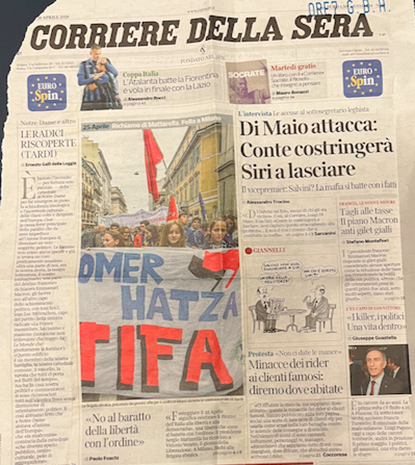
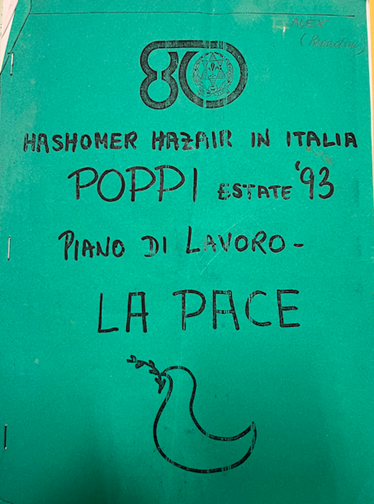
Besides its weekly activities, Hashomer Hatzair Italy’s main focus, as emerges from the CDEC collection, lies on the activities delivered during the summer and winter camps. These documents highlight a clear connection to the scouting movement: its symbols and methods, such as sleeping in tents or singing around bonfires, distinguish the Italian movement from the other branches of Hashomer Hatzair worldwide to this day. Unsurprisingly, the majority of the memories and anecdotes recalled in the interviews are related to events that happened during the camps. Today, the camps are organized in winter and summer (mahane horef/qaitz),hosting more than two hundred youngsters, and are jointly led by the mo’etzet habogrim (the assembly of the leaders of the group) discussing the educational activities and the shlihim. To prepare, the mo’etzet habogrim establishes a work plan (known as a PDL; that is, “piano di lavoro”) about a specific subject, usually valid for all the groups. I remember devoting all my strength and knowledge to preparing a work plan on “Socialism and Work.” While a comprehensive analysis of summer and winter camps requires separate study, newspapers and personal recollections from the CDEC collection provide unique insights into their evolving activities, emotional landscapes, and collective memories.
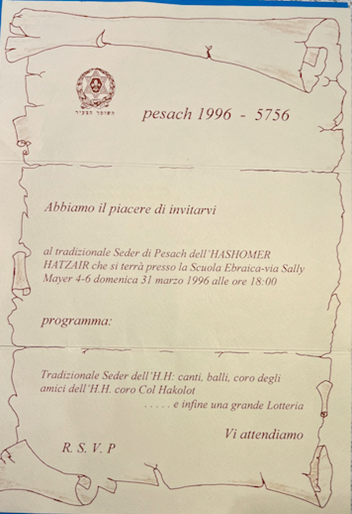
Among the CDEC collection, the materials prepared for Jewish festivities (including shironim, or collections of songs, haggadot, or stories, plays, invitations, events, and specialized journals)61 stand out. They represent a precious source for the CDEC and for Jewish studies in Italy, because they contain an insight into secular Jewish society and how it perceived Jewish festivities. Hashomer Hatzair does not consider itself a religious movement, but it adapts itself to the societies in which it is active. In this sense, the encounter between Hashomer Hatzair practices and ideology and the Jewish communities worldwide is very interesting. For instance, the activities are held on a Saturday, the Jewish holy day of rest.62 Although its members are permitted to observe religious practices such as festivities and kashrut, they are not officially enforced within the movement. As a result, Italian rabbis currently advise individuals considering conversion to Judaism against participating in Hashomer Hatzair’s activities.63 Even though it is not a religious movement, Judaism is one of its three pillars, and many activities are intended to teach about Judaism and its values. In this sense, members of Hashomer Hatzair Italy created their own system of rituals that are partly connected to traditional ones, with secular values taking precedence over religious practices. This way of celebrating these festivities might also have influenced many Italian Jews and their families.
Finally, the last and pivotal group of materials illustrates the depth of the relations, transnational networks, and social activism expressed by the Italian movement. For instance, as already stated, it is worth mentioning the influence of the French, Tunisian, and Algerian branches of Hashomer Hatzair in the creation of the Italian movement,64 ideological relations established in European or international congresses,65 official documents attesting the status of the Hashomer Hatzair World Movement, letters exchanged with MAPAM and books about the party,66 manifestos for Peace Committees in the Middle East,67 and relations and debates with other Jewish youth movements (the FGEI and Bnei Akiva). Among the documents concerning international seminars, the records of those that took place in Poland may be particularly relevant for researchers. From the 1990s, the Hashomer Hatzair movement started organizing journeys of remembrance to Poland for the older age groups in each ken.68 These trips, revolving around the Shoah, antisemitism, and antifascism, became one of the crucial steps for the bagrut (literally “adulthood”) within the youth movement. They are preceded by specific preparatory work before the seminar, which is lived as a collective experience, in which Hashomer Hatzair members study how the Second World War marked a watershed moment in Hashomer Hatzair’s history: British Palestine became the operative center of the movement, while the branches in Poland became forever remembered for their resistance against Nazism in the ghettos.69 In this sense, Mordechai Anilewicz, rosh ken (literally “head of the nest”) in Warsaw and one of the operational leaders who lost his life during the uprising, underwent a process of heroization, becoming the main icon of the movement to this day.70
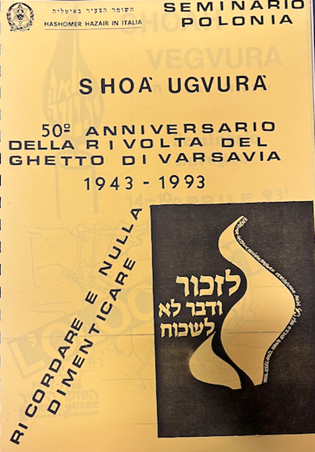
The collection’s inclusion of the material produced for these trips helps to illustrate the engagement with the Shoah for educational purposes in an international movement such as Hashomer Hatzair, how this content affected the organization’s members, or whether and how it shaped the Italian discourse about the Shoah.
To conclude this overview of some relevant documents, Hashomer Hatzair Italy emerges as a highly politicized, communal, recreative, educative, secular movement connected to a strong Italian tradition, and at the same time to the international movement.
Future Developments and Conclusions
With the materials and topics of the Hashomer Hatzair archival collection now outlined, this section aims to offer possible suggestions for future research lines, elucidating why it is so crucial for the CDEC Foundation to house these documents. For instance, the collection permits an in-depth analysis of debates about Judaism, particularly how its secular interpretation was perceived by part of Italian Jewish society after the Second World War. This is intrinsically connected both to the analysis of secular religious practices and their development, and to their reception within the Italian Jewish religious environment. Furthermore, this archival collection offers a unique perspective on the fluid and constantly evolving intersections within Zionism and leftist ideologies, how they were approached by Jewish youngsters all over the world, and how they vary and interact over time, depending on specific historical events. Interestingly, this analysis is closely tied to the study of this ideology’s transnationality and practical interconnections, not just in the European context. Seeing how young Jewish leftists around the globe formulated their thoughts and discussions concerning socialism and Zionism, or which personalities they referred to, allows for a better comprehension of both leftist and Zionist movements. For instance, a vast number of sources concern the kibbutzim, with shomrim and shomrot narrating their nuanced experience within them. Thus, it is crucial to employ the information in this collection to interpret the multifaceted relations between Israel, Italy, and the Jewish communities.
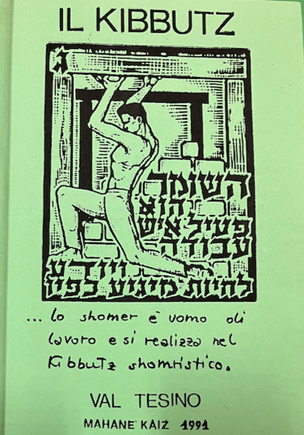
This wide variety of sources enables different methodological approaches. They can provide insight into gender relations within the Jewish or Hashomer Hatzair community over time. From a similar perspective, they exemplify languages and symbols of the Italian youth of the 1970s, 1980s, and 1990s and their discussions and troubles, serving as an important tool for cultural studies. At the same time, they can help with some biographical studies of famous and important Italian personalities who belonged to this youth movement. The list of possible subjects is very long, including the development of an informal educational system, the memory of the Holocaust, the internal dynamics of grassroots movements, and social activism of Jewish communities and Jewish Scoutism, to mention only a few.
Thus, the CDEC Foundation project reveals its foresight in having been attentive to comprehending the dynamics of modern Italian Judaism and giving researchers the possibility to intertwine these documents with those in other collections (the CEM, the FGEI, Rav Schaumann, Cohenca, Edoth,71 and the ADEI). However, other important steps are required to amplify the relevance of the project. This includes bringing in new researchers and the establishment of new connections with other archives. The project should be enlarged not just to include other cities, countries, and timespans, but also to involve other movements, such as Bnei Akiva in Italy. This expansion would enable the exploration of new and deeper research lines and would permit many comparative approaches regarding ideology, religion, and relations to Israel among post-WWII youth movements in Italy: the GEEDI, the FGEI, Bnei Akiva, and Hashomer Hatzair, encompassing a timespan from hakhsharot and “Generation ’48” until the present day. A collection like this one reveals the need to research Zionist movements—not only their institutional and ideological characteristics, but also their symbols and traditions—in order to better engage with their history and heritage. Increased attention should also be directed to thoroughly documenting themes that are currently difficult to find in it, such as materials related to the ghetto uprisings, to the Israeli-Palestinian conflict, or to other cultural and symbolic aspects of this movement. Much work still has to be done, but the foundation is very promising.
1 On the role played by Jewish folk dances as a means of nation-building, see Martina Topic, “A Dancing Nation—Cultural Sociology of Dancing in Israel: An Introduction,” Israel Affairs 23 (2017): 995-1002.
2 By the “Kibbutz Movement,” I mean Kibbutz Ha’artzi. In this sense, Kibbutz Ha’artzi is one of four kibbutz movements created prior to 1948 before the foundation of the State of Israel. These were networks of kibbutzim with shared ideologies that were mutually supportive. Kibbutz Ha’artzi held a socialist view of life, and in 1999, it merged with the United Kibbutz Movement. Moshe Schwartz, Orit Degani Dinisman, and Uri Weber, “Can a New Kibbutz Ideology Emerge in the Twenty-First Century?”, in The Metamorphosis of the Kibbutz, eds. Eliezer Ben Rafael and Orna Shemer (Leiden: Brill, 2021), 156.
3 “Questa è la storia… di un gran movimento.”
4 In the long term, this concept contributed to the development of the ideal of the “Muscular Jew,” further contrasting the “pioneers” with those living in the Diaspora. For further information on the subject, see Patrick Farges, Le Muscle et l’Esprit. Masculinités germano-juives dans la post-migration: Le cas des yekkes en Palestine/Israël après 1933 (Brussels: Lang, 2020).
5There is a considerable body of literature on the early years of Hashomer Hatzair’s formation and diffusion in Europe and North Africa; of particular interest are Elkana Margalit, “Social and Intellectual Origins of the Hashomer Hatzair Youth Movement, 1913–20,” Journal of Contemporary History 2 (1969): 25-46; Ofer Nordheimer Nur, “Hashomer Hatzair Youth Movement 1918–1924 from Eastern Galicia and Vienna to Palestine: A Cultural History” (PhD diss. University of California, 2004), 25-139.
6 Among them, besides collectivism, egalitarianism, democracy, and antifascism, the main recent debates have concerned intersectional feminism and environmentalism. For more about current Hashomer Hatzair ideology, see “Ideology,” Hashomer Hatzair World Movement, https://www.hholami.com/ideology (accessed DecembreJ 20, 2025).
7 MAPAM means “Union of the Workers of Eretz Israel.” It was founded in 1948 as an expression of Kibbutz Ha’artzi’s and Hashomer Hatzair’s position, with a strong socialist-Marxist policy and a pro-Soviet Union stance until 1956. Many Hashomer Hatzair members, from Meir Yaair and Mordechai Bentov to Abba Hushi and Shulamit Aloni, were part of the political intelligentsia of MAPAM and other leftist parties in the State of Israel, and later the Meretz party. In this sense, Tal Elmaliach also notes that MAPAM was a mediator between Kibbutz Ha’artzi and national institutions: Tal Elmaliach, Hakibbutz Ha’artzi, Mapam, and the Demise of the Israeli Labor Movement (Syracuse: Syracuse University Press, 2020), 22. For a perspective on Hashomer Hatzair’s role in Israeli politics, see the interview with Roberto Della Rocca in the Audiovisual Collection ACDEC. Elmaliach also observes that every kibbutz depended on a central organization—Kibbutz Ha’artzi in the socialists’ case—operating “for financial, organizational, and political support. Young members and graduates of Hashomer Hatzair who had received pioneer training and sought to carry out the movement’s ideals joined these existing kibbutzim or founded new ones with the help of the bigger organization”: see Elmaliach, Hakibbutz Ha’artzi, 15.
8 In this context, it is also interesting that the Nakba has become a subject of study in Hashomer Hatzair. However, its relationship with the Palestinian population remains a subject of controversy: see Joel Benin, “Knowing Your Enemy, Knowing Your Ally: The Arabists of Hashomer Hatza’ir (MAPAM),” Social Text 28 (1991): 100-122; Areej Sabbagh-Khoury’s analysis of three different cases of kibbutzim from Hashomer Hatzair described as collectivist settler colonies born on Palestinian villages—Mishmar ha-Emek, Hazorea, and Ein Hashofet—in Sabbagh-Khoury, Colonizing Palestine, the Zionist Left and the Making of the Palestinian Nakba (Stanford: Stanford University Press, 2023).
9 See the cover of an issue of Deot, a newspaper published by Hashomer Hatzair Italy, commemorating the fiftieth anniversary of the foundation of the Italian movement. See also Daniel Soria, “Deot-Opinioni, dicembre 1996,” Hashomer Hatzair collection, F. 14, Sf. 6, ACDEC.
10 Sabrina Sciama, “Daf Haken edizione per il ventesimo anniversario,” Hashomer Hatzair collection, F. 3, Sf. 1, ACDEC.
11 As mentioned above, there is literature about Hashomer Hatzair and its origins. However, there is a lack of sources regarding Hashomer Hatzair in post-WWII Italy. The first person to bring the topic into a scientific framework was Marcella Simoni, “Young Italian Jews in Israel, and Back: Voices from a Generation (1945–1953),” in Italian Jewish Networks from the Seventeenth to the Twentieth Century, eds. Francesca Bregoli, Carlotta Ferrara Degli Uberti, and Guri Schwarz (New York: Palgrave MacMillan, 2018), 173-200.
12 Hakhsharah (literally “preparation”): training for kibbutz life, or a group undergoing such training.
13 Regarding the generation, history, and perceptions of the first ‘olim (migrants to Israel) from Italy after WWII, see Simoni, “Young Italian Jews,” which mentions the origins of Hashomer Hatzair and Bnei Akiva (literally “Akiva’s sons, Jewish religious youth movement) and their rivalry with the non-Zionist Federazione Giovanile Ebrei d’Italia (FGEI). The CDEC collection also intersects with the work of Arturo Marzano, “Italian Jewish Migration to Eretz Israel and the Birth of the Italian Chalutz Movement (1938–1948),” Mediterranean Review 3 (2010): 1-29. Furthermore, Chiara Renzo undertook a profound investigation of the complex system of Italian DP camps, also digging into the experiences of the hakhsharot and the Zionist movements that ran them: Chiara Renzo, Jewish Displaced Persons in Italy 1943–1951: Politics, Rehabilitation, Identity (London: Routledge, 2024). On the Jewish Italian communities and their reconstitution after Fascism, see Guri Schwarz, After Mussolini: Jewish Life and Jewish Memories in Post-Fascist Italy (London: Vallentine Mitchell, 2012). For the Jewish Brigade’s role in post-war reconstruction in Italy, see Stefano Scaletta, La brigata ebraica tra guerra e salvataggio dei sopravvissuti alla Shoah (1939–1947) (Turin: Silvio Zamorani, 2024).
14 Brazil is the only country with a comparable organizational structure to Italy, as both have numerous active and collaborative kenim. France, which once had two active kenim, no longer maintains this structure.
15 In the past decade, there have been attempts to create branches in Naples and Padua.
16 Previously, the structure was different. Between the 1990s and the early 2000s, for instance, the role of shaliahin Milan was often filled by Israeli individuals already residing in Italy, sometimes with support from shlihonim (young emissaries). Currently, there is a shaliah based in Rome, with a satellite operation in Florence, and a second in Milan, who also oversees activities in Turin and in Northern Italy.
17 The experience of ken Merchavia can be understood through the files of Gadi and Alisa Luzzatto Voghera: Gadi Luzzatto Voghera, “Giornali del ken Merchavia,” Hashomer Hatzair collection, folder 3, subfolder 6, ACDEC; interview with Alisa Luzzatto Voghera, Audiovisual Collection ACDEC. Traces of other kenim can be found in Daniel Soria, “Giornali Deot,” Hashomer Hatzair collection, F. 14, Sf. 1, ACDEC.
18 The Hashomer Hatzair movement has consistently focused on engaging with Jewish communities considered peripheral within the Italian system. Its strategy involved establishing new local branches, wherever there was interest. This strategy makes it difficult to accurately trace and date the movement’s presence throughout Italy.
19 The organizational structure of Hashomer Hatzair varies across different cities; however, the movement’s kenim (plural of ken, local branch) are typically directed by a shaliah (emissary). The primary decision-making and educational body is the mo’etzet habogrim, an assembly composed of bogrim (seniors, generally aged between fifteen and eighteen). These senior members also serve as madrikhim (leaders/educators) for the younger qvutzot (peer groups).
In many European contexts, there is also a shlihon (junior emissary); this is usually a graduate of the movement who has remained active within the ken. The shlihon acts as a mediator between the mo’atzah (council), the shaliah, and the va’adat horim (the parents’ committee). The latter is an elected committee composed of the parents of Hashomer Hatzair members, providing a bridge between families and the institutional leadership. In some countries, such as Italy, there are groups of adults who continue the Hashomer Hatzair lifestyle in various ways (in Europe, this takes the form of cultural houses or qvutzah life).
20 The interview with Edda Schwarz clarifies this context: see the interview with Edda Schwarz in the Audiovisual Collection ACDEC. Furthermore, the link between hakhsharot and Holocaust survivors has been well described by Verena Buser and Chiara Renzo, “Training for Aliyah: Young Jews in Hakhsharot across Europe between the 1930s and late 1940s,” Quest. Issues in Contemporary Jewish History. Journal of the Fondazione CDEC 21, no. 1 (2022), https://www.quest-cdecjournal.it/training-for-aliyah-young-jews-in-hachsharot-across-europe-between-the-1930s-and-late-1940s/ (Accessed December 20, 2026).
21 Cahana died in the Arab-Israeli War on 24 May 1948. Simoni mentions that he was singing Bandiera Rossa in Italian before he died. Simoni, “Young Italian Jews,” 183; Marco Cavallarin, Zofim 1944–1946, la meglio gioventù ebraica (Milan: Keshet, 2011).
22 Cavallarin, Zofim, 79-88; Renzo, Jewish Displaced Persons in Italy, 111. Interestingly, the course on Palestinography was taught by the future president of the CDEC, Eloisa Ravenna. Her death was notably commemorated by Hashomer Hatzair in a document in Tamara Rabà, “Alle istituzioni ebraiche e agli amici dell’Hashomer Hatzair, 9 settembre 1973,” Hashomer Hatzair collection, F. 4, Sf. 4, ACDEC.
23 Simoni references an interview with Bruno Segre (Haifa, 28 July 2009), in which he recalls a key figure with the statement: “Silica era un profugo attivista di Hashomer Hatzair che è piombato a Torino e ci ha silicato tutti” (“Silica was an activist refugee from Hashomer Hatzair who landed in Turin and ‘silicated’ all of us”): Simoni, “Young Italian Jews,” 183.
24 The issue of Deotmentioned above affirms that the Tzofim were created in 1945 in Via Unione, Milan. It is possible that both are true.
25 This information is given by Ziva Fischer aka Grazia Modiano, in an interview with Anna Segre published in Segre et al., eds., Hashomer Hatzair Ledor Vador (Rome: Hashomer Hatzair, 2013).
26 Simoni mentions their support in hakhsharot, as in Rome (Via Balbo, 33) and Milan (Via Unione, 5), in Simoni, “Young Italian Jews,” 179-182.
27 In Hechalutz 10, no. 2 (1955), it emerges that the Tzofim were created in 1945. In Milan, the GEEDI were first created under the influence of Beniamino Matalon, Franca Brod, Ferruccio Voghera, and Adele Rimini. See Segre et al., Hashomer Hatzair Ledor Vador, 34-36.
28 Yishuv literally means “settlement” and refers to the Jewish community in Palestine before 1948.
29 The Hehalutz movement is best understood, as Elmaliach suggests, as an “umbrella organization of all the pioneering youth movements that had been founded.” See Elmaliach, Hakibbutz Ha’artzi, 6. In Italy, the movement was established in 1945 at Ceriano Laghetto, as documented by Hehalutz newspaper on 1 June 1946. As Simoni notes, the movement included representatives from various kibbutz affiliations. For instance, Max Varadi, whose correspondence with Rabbi Shachmann is featured in the new CDEC collection, served as a shaliah for the religious Kibbutz Movement (Kibbutz Ha-Dati). See Simoni, Young Italian Jews, 183.
30 MAPAI (The Workers’ Party of the Land of Israel) was the leading party in the Labour Zionist movement. Its leaders have included David Ben-Gurion, Berl Katznelson, and Moshe Sharett.
31 See Hashomer Hatzair Italy, files 3-2-04/000002/000002 (pirsomet); 3-2-04/000002/000001 (hovrot), Yad Yaari Archive, Archive Hashomer Hatzair Movement in Israel and Worldwide, Giv’at Haviva (Israel).
32This meant officially belonging to the GEEDI until the age of seventeen and then joining Hehalutz. See Cavallarin, Zofim, 87-88.
33 Ibid.
34 Eldad Hadar “Shabab,” Hehalutz (5 October 1949); Hadar, “Zofim a Congresso,” Hehalutz (7 September 1950). Simoni underlines his importance for Hehalutz, together with Corrado Israel De Benedetti, a crucial figure.
35 Marcella Simoni focuses on the history of the hakhsharah in Tel Broshim. Interestingly, she outlines the history of “Generation ’48” as a collective history.
36 There are two significant examples of the collective life of Tel Broshim: firstly, they had a cow, and secondly, they cultivated a garden. For these reasons, they received school certification from the ORT (the Jewish network of schools for the promotion of skilled trades). See “Produzione della Hasciarà Tel Broshim,” Hehalutz (20 October 1950): 6, and Cavallarin, Zofim, 15.
37 There is another interesting case, occurring in an Italian context of a strong political polarization, in which they were accused of killing Don Ugo Bardotti, as they were leftist and Jewish. See Segre et al., Hashomer Hatzair Ledor Vador, 20-22.
38 Interestingly, the vast majority of the personal recollections described a watershed moment, the shift of power toward the socialistic ideals of Hashomer Hatzair in the Zionist scouting movement within the hakhsharah of Tel Broshim in 1954. See the interviews with Edda Schwarz and Giuseppe Franchetti in the Audiovisual Collection ACDEC. In the same years, MAPAI was embracing the idea of ceasing its activities in Italy: see Segre et al., Hashomer Hatzair Ledor Vador, 23-25.
39 Simoni observes that the majority of “Generation ’48” made ‘aliyah to kibbutzim affiliated with Kibbutz Ha’artzi: see Simoni, Young Italian Jews, 184. Interestingly, there are also many cases of people coming back, such as Giuseppe Franchetti, Giordano D’Urbino, Bruno Cases, and Tamara Rabà. For their reasons for doing so, see the interview with Giordano D’Urbino and Bruna Cases in the Audiovisual Collection ACDEC.
40 According to Franchetti’s recollections, a 1956 camp in Pian de Falco was attended by eighty-three young members of Hashomer Hatzair from Tunisia. Furthermore, he noted that the GEEDI sent a representative from Ferrara named Renzo Bonfiglioli to the MAPAM delegation. He also held this role after Beniamino Matalon (the promoter of the Zofim in Milan). Segre et al., Hashomer Hatzair Ledor Vador, 23-25.
41 Bnei Akiva is a global youth movement active to this day, with branches in Rome and Milan. Its ideology is based on “Torah ve-‘Avodah” (“Torah and work”), and it was born as an expression of Kibbutz Ha-Dati and of the religious section of the GEEDI. On Hashomer Hatzair, Bnei Akiva, and their relations with the communities, see also Giovanni Battista N. Paglianti, “Profilo dell’associazionismo giovanile ebraico,” in E li insegnerai ai tuoi figli. Educazione ebraica in Italia dalle leggi razziali a oggi, ed. Anna Maria Piussi (Florence: Giuntina, 1997), 201-209.
42 In Rome, the first ken of Hashomer Hatzair was established in the Via delle Zoccolette. This choice of location was necessitated by the Roman Jewish community’s disapproval of the movement’s ideological shift, which led to them being forbidden to hold their activities in the community’s premises. In Milan, after the first meetings in the synagogues, the first ken was established in the Via Torino. See Segre et al., Hashomer Hatzair Ledor Vador, 72-73.
43 See the interviews with Gabriele Eschenazi and Yehuda Szneider in the Audiovisual Collection ACDEC. See also Segre et al., Hashomer Hatzair Ledor Vador, 45-55, which stresses the continuities in Rome thanks to the figure of Dan Funaro.
44 Interestingly, we can see that they had to bring clothes for skiing, the hultzah shomrit, and material to sew. See Gabriele Eschenazi, “Hashomer Hatzair Italia Campeggio invernale 1966 Cervarezza,” Hashomer Hatzair collection, F. 1, Sf. 6, ACDEC.
45 These concepts have remained central to the discourse, even as their meaning and application have evolved. For example, as previously discussed, the concepts of ‘aliyah and halutzism differ significantly in their contemporary and historical contexts.
46For the creation of networks of generations of shomrim and shomrot, see the interviews with Tamara Rabà and Michelle Mimun, Ruth Haube, and Vito and Michaela Foa in the CDEC Audiovisual Collection.
47 Riccardo Sorani, “Progetto per la realizzazione Banca Hashomer Hatzair,” Hashomer Hatzair collection, F. 7, Sf. 5, ACDEC.
48Around one hundred members and former members of Hashomer Hatzair took part in this project. This work resulted in the publication of Segre et al., Hashomer Hatzair Ledor Vador.
49 See the digital collection on the Digital Library of the CDEC Foundation, https://digital-library.cdec.it/cdec-opac/tree/IT-CDEC-ST0081-000001/hashomer-hatzair-italia?t=inventario (Accessed December 20, 2025).
50 The primary conservation issues include mold, tears, and the use of adhesives or fountain pens, the ink from which can make the text difficult to read.
51 For Venice, see Gadi Luzzatto Voghera, Hashomer Hatzair collection, F. 3, Sf. 4-8, CDEC Foundation Archives. For Rome and other cities, see the documents in Tamara Rabà, Hashomer Hatzair collection, F. 4, Sf. 2, ACDEC.
52 Daf Haken was led by Gabriele Eschenazi, while Kol Hashomer was launched in 1966. The first issues of these publications in the archive are those edited by Sira Fatucci and Ghidon Fiano. See Tamara Rabà, “Kol Hashomer, 1973,” Hashomer Hatzair collection, F. 4, Sf. 2, ACDEC.
53Ghitta Kahan, Hashomer Hatzair collection, F. 8, Sf. 1-2, ACDEC. On this note, it would be interesting to dig further into Hashomer Hatzair’s position in relation to antisemitism, still a highly debated subject. For the main contemporary debate on antisemitism, see Carlotta Ferrara Degli Uberti, “Combattere l’antisemitismo attraverso le definizioni,” Passato e presente 120 (2023): 61-77.
54 For example, some of the journals published in Milan and Rome were named Chevra, Kol Hashomer, Daf HaKen, Hed HaKen, Anachnu, and Achshav.
55 For instance, it is particularly enlightening to examine how Hashomer Hatzair members commented on Rabin’s assassination in 1995, given his central role within the movement due to his commitment to the peace process. Daniel Soria, “Deot, dicembre 1995,” Hashomer Hatzair collection, F. 14, Sf. 1, ACDEC.
56 These include activities related to the 1973 Yom Kippur War, the 1977 Lebanon War, and even the 2001 attack on the Twin Towers.
57 For the effects of the 1982 synagogue attack on the Jewish Italian community, see Arturo Marzano and Guri Schwarz, Attentato alla Sinagoga. Roma 9 ottobre 1982. Il conflitto israelo-palestinese e l’Italia (Rome: Viella, 2013).
58 Hashomer Hatzair’s public resonance was notably amplified by events such as the April 25 demonstrations.
59 Shalom ‘Akhshav—Salam Al’an—Peace Now is an Israeli peace movement, founded in 1978. For more about it, see Tamar Hermann, “The Israeli Peace Movement,” in Mobilizing for Peace: Conflict Resolution in Northern Ireland, Israel/Palestine, and South Africa, eds. Benjamin Gidron, Stanley N. Katz, and Yeheskel Hasenfeld (eds.),(Oxford: Oxford University Press, 2002), 101-109; and Mordechai Bar-On, Peace Now: The Portrait of a Movement (Tel Aviv: Hakibbutz Hameuhad, 1985) [in Hebrew].
60 The kenim of Hashomer Hatzair Italy hosted important personalities in Italian culture and politics for different events, for example, Giorgio Gaber, Herbert Pagani, Leo Herzog, and Noam Chomsky (online), or the deputies Piero Terracini, Pierfrancesco Majorino, and Emanuele Fiano.
61 There is a rich tradition of reinterpretations of haggadot booklets, not just in the Hashomer Hatzair environment. Furthermore, numerous plays were created for both Pesah and Purim. See Hashomer Hatzair Turin, “Recite,” Hashomer Hatzair Collection, ACDEC, currently uncatalogued.
62 Before the 1990s, the activities in Milan and Rome took place on Fridays.
63 Interestingly, as Yehuda Szneider notes, it was not always like this in the past; he recalls that Rav Toaff from the Roman community endorsed Hashomer Hatzair for Italian Jewish youth despite preferring Bnei Akiva. See the interview with Yehuda Szneider in the Audiovisual Collection ACDEC.
64 Furthermore, the works of Joel Benin reveal the active role of Hashomer Hatzair in Egypt, and its connections with the Israeli and international movement. See Joel Benin, The Dispersion of Egyptian Jewry, Culture, Politics, and the Formation of a Modern Diaspora (Berkley, Los Angeles, London: University of California Press), 121-140.
65 Marco Krivacek, “Seminari internazionali,” Hashomer Hatzair collection, F. 7, Sf. 1, ACDEC.
66 Gabriele Eschenazi, “Federazione Sionistica Italiana e MAPAM,” Hashomer Hatzair collection, F. 2, Sf. 2, ACDEC.
67 Gadi Luzzatto Voghera, “Comitato giovanile per la pace,” Hashomer Hatzair collection, F. 3, Sf. 5, ACDEC.
68 The historical component for the Italian delegation to the first seminar was overseen by Professor Marcello Pezzetti (the first seminar in Poland was led by the Shoah survivor Shlomo Venezia: see Alex Soria, “Opuscolo sul viaggio in Polonia 1994,” Hashomer Hatzair collection, F. 10, Sf. 3, ACDEC). From the late 1990s onward, Professor Andrea Bienati took over the historical preparation for these trips (co-leading the eightieth anniversary trip with Talia Bidussa). The first documented seminar in Poland for the Italian movement took place in 1990, after the fall of the Soviet bloc. See Alex Soria, “L’Hashomer Hatzair sulle tracce della Shoah, 1991,” Hashomer Hatzair collection, F. 10, Sf. 3, ACDEC. This followed earlier, sporadic tours to Mauthausen in the 1970s. See Sabrina Sciama, “Daf Haken, 30 aprile1976,” Hashomer Hatzair collection, F. 3, Sf. 1, ACDEC.
69 For instance, members of Hashomer Hatzair played a significant role in organizing uprisings in cities such as Warsaw, Vilna (now Vilnius), Białystok, Tarnów, and Częstochowa. On the shift in operational centers from Poland to British Palestine. Rona Yona,“From Russia to Palestine via Poland: The Shifting Center of Socialist Zionism,” Contemporary European History 30 (2021): 513-527.
70 For example, Mordechai Anielewicz’s last letter was put on the cover of the booklet (curated by Edna and Yehuda Livn and Gilia and Dudi Dankner) for participants in the seminar in Poland in 1996. Daniel Soria, “Choveret Polonia 1996,” Hashomer Hatzair collection, F. 11, Sf. 2, ACDEC.
71 Edoth is a CDEC Foundation project researching the histories of Jews migrating from countries in the Middle East and North Africa. Interestingly, many Hashomer Hatzair members had migration backgrounds from those countries, and these experiences and identities contributed to the shomeric community and lifestyle. See the interview with Tamara Rabà and Michelle Mimun in the Audiovisual Collection ACDEC.
