


Reweaving Jewish Migrations
Throughout the twentieth century, Italy occupied a complex position in the geography of Jewish migrations. Initially a country of passage for refugees, traders, and travelers, it gradually evolved—particularly in the aftermath of World War II—into a stable destination for Jewish immigration.
Nowhere was this transformation more visible than in Milan. At the beginning of the century, the city’s Jewish community counted only 3,373 members, while by the postwar period, it had become one of the most dynamic Jewish centers in the country, with 8,488 members in 1965.1 This growth was largely the result of successive waves of migration from diverse regions—Central and Eastern Europe, the Middle East, and North Africa—making it a crossroads of Jewish diasporic trajectories and a microcosm of twentieth-century Jewish mobility.2 Milan’s evolution parallels broader demographic changes in Italian society. In the postwar decades, Italy itself shifted from a country of emigration to one of immigration, gradually becoming a destination for foreign populations seeking new opportunities.3 The city of Milan emerged as a central hub in these migratory processes, attracting both internal migrants from southern Italy and newcomers from abroad.
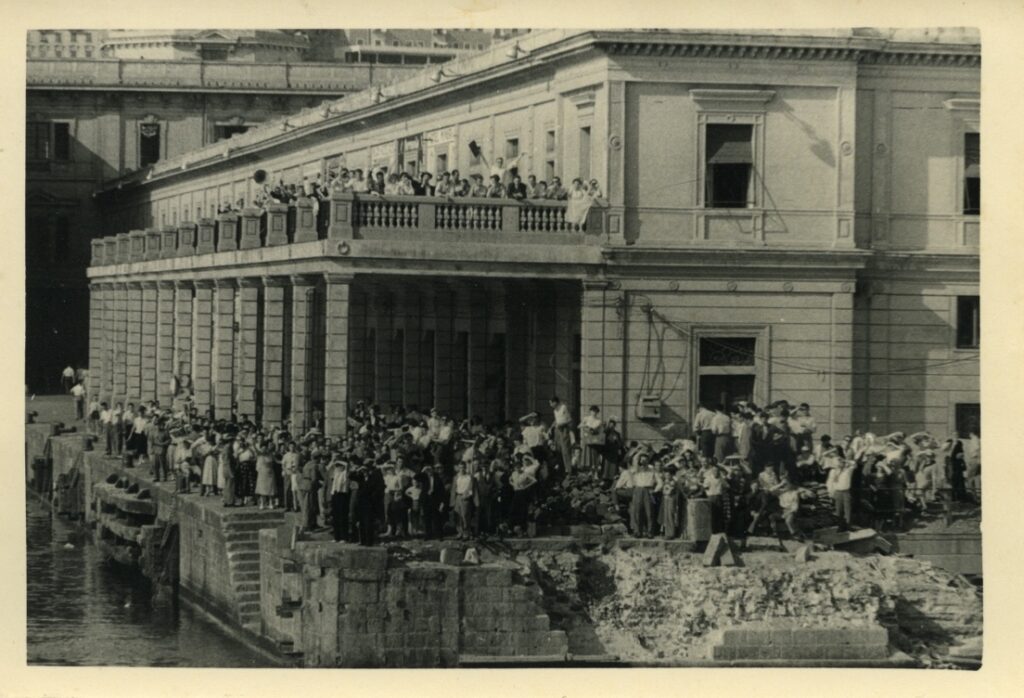
During the 1930s and 1940s, thousands of Jews from Central and Eastern Europe passed through Milan, often en route to safer destinations or their long-awaited new homes. Before Italy entered the war and closed its borders to migrants, Milan—together with cities like Trieste and Genoa—had already emerged as a crucial transit hub for Jews crossing the Alps and seeking embarkation ports for overseas destinations.
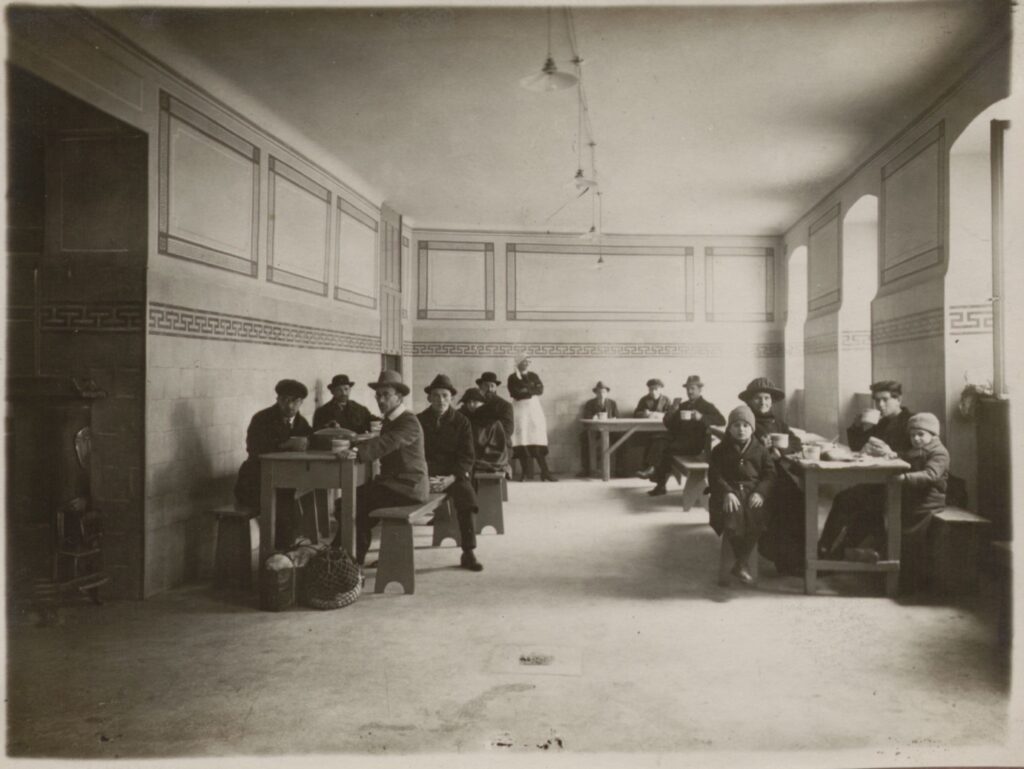
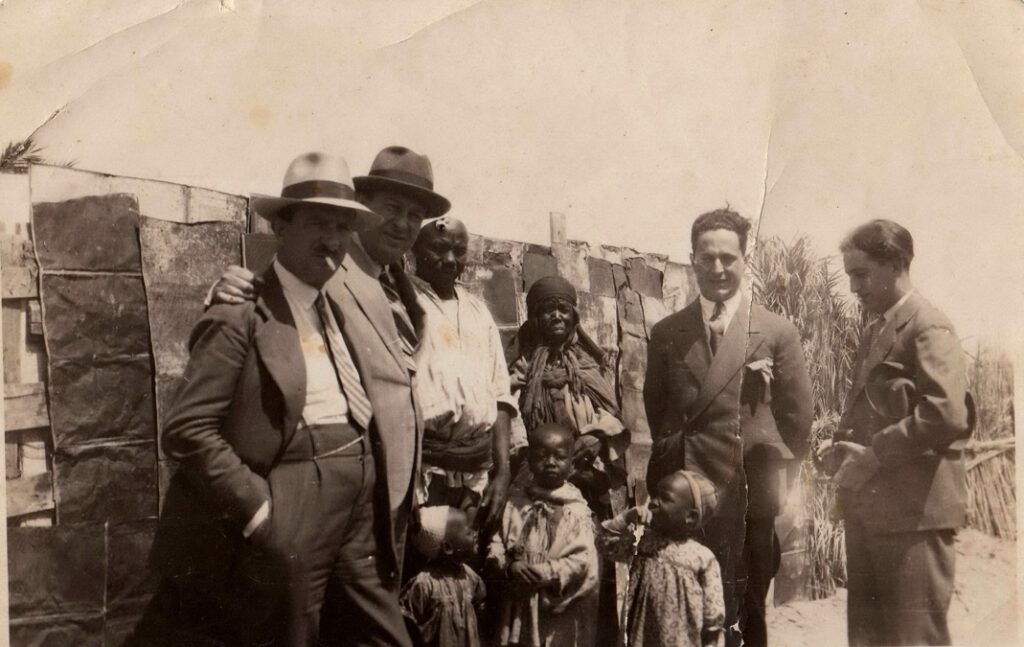
CDEC Foundation Archives (henceforth ACDEC), Milan
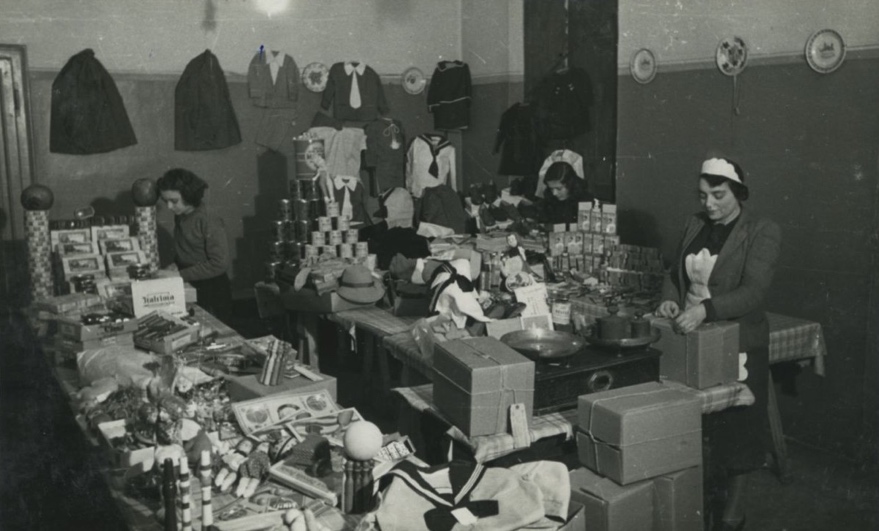
After the war, Milan once again became a major arrival point for survivors: beginning in May 1945, the reception center at Via Unione 5 housed the principal Jewish relief organizations, offering immediate assistance to displaced persons and helping them to reintegrate into Italian Jewish communal life.4
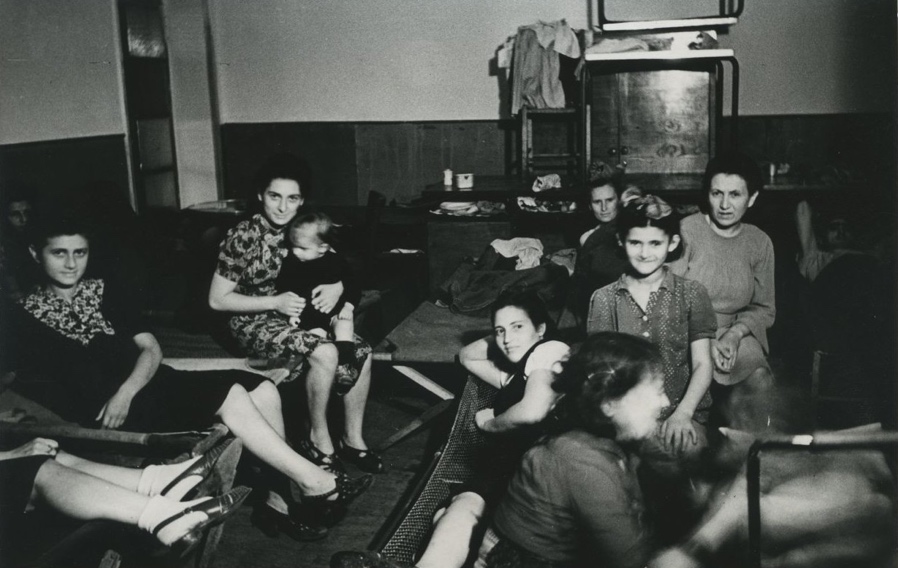
From the second half of the 1940s, however, the city became a point of arrival for a new migratory trajectory—one that connected Italy to the southern and eastern shores of the Mediterranean. As documented in the records of the Milanese Jewish Community preserved in the CDEC Foundation, it was during these years—when community institutions were already dealing with thousands of European Jewish refugees—that they received the first requests for assistance from Jews of Middle Eastern and North African origin.5
Jews from Turkey, Iraq, Iran, Lebanon, Syria, Egypt, and Libya settled in Milan, bringing with them diverse backgrounds and memories that profoundly reshaped the local community. While these migratory experiences differed in character and circumstances, they were all driven by a shared quest for safety and the hope of rebuilding life elsewhere, at a time when the situation for Jews in many Middle Eastern and North African countries was becoming increasingly precarious. Within this broader framework, the history of Jewish migration to Milan offers a lens through which to explore how patterns of mobility and integration shaped both the broader Italian society and the cultural landscape of contemporary Jewry.
It was precisely thanks to reflection on this distinctive mosaic of Milanese Jewry that the CDEC Foundation began to develop a new line of documentation and research in the last two decades. As several contributions to this issue of Quest have shown, the CDEC was originally established in order to document the persecution of Jews in Italy and their participation in the resistance against Nazism and Fascism. Over time, it broadened its mission, building a rich and diverse archival collection that mirrors the plural dimensions of Italian Jewish life. One of its most innovative initiatives was Edoth,6 an oral history project launched in 2010 to collect oral testimonies, documents, and photographs of Jews who arrived in Italy from the Middle East and North Africa (MENA) region in the second half of the twentieth century, whose experiences had often been marginalized or absent from mainstream narratives of Italian Jewish history.
The Edoth collection today includes n. 139 oral interviews, most of which were recorded in Milan with a smaller number later being collected in Rome among Jews of Libyan origin. Conducted with both men and women—representing approximately 40 percent and 60 percent of the participants respectively—the interviews offer vivid portraits of first-generation immigrants. They provide insight into family histories, everyday life in their countries of origin, encounters with local societies, and the political transformations that marked the second half of the twentieth century and often drove them to leave their homeland. The interviews also shed light on the experience of migration itself—the journey, the arrival in Italy, and the gradual process of integration—while reflecting on identity, belonging, and the ways in which uprootedness and resettlement reshaped the interviewees’ identity.
Building upon the sources collected through Edoth, in 2023 the CDEC launched TRAME: Tracing Routes and Memories—Entangled Jewish Experiences across the Mediterranean.
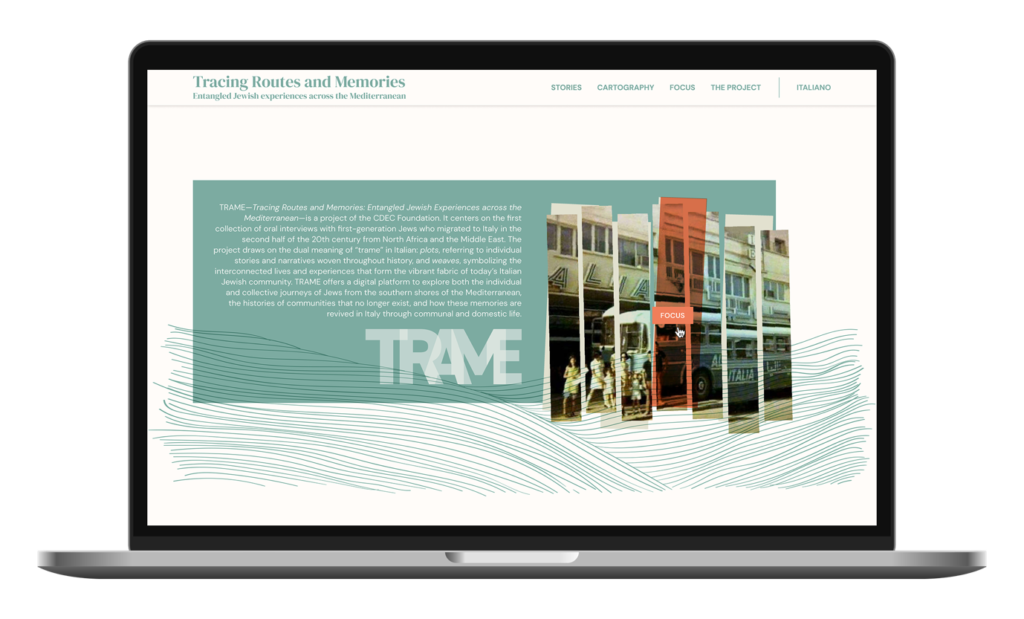
The project pursues a dual objective: first, to transform the oral and visual documentation gathered during the previous years into a structured archival collection explorable through the CDEC Digital Library, and second, to develop a dedicated online platform to make these histories available and meaningful through the tools and methodologies of the digital humanities (trame.cdec.it).7 By shedding light on this unique archival corpus—unprecedented in the Italian context—and with the aim of creating an accessible narrative space, TRAME seeks to weave together individual life stories into a collective tapestry of Jewish migration, linking personal memories to the broader historical processes that have shaped contemporary Italian Jewry and Italy’s evolving relationship with Jews in and from the MENA region. At the same time, the project has an educational and public outreach dimension, as TRAME aims to serve as a resource for teachers, students, and the wider public interested in the intertwined histories of migration, memory, and identity in the Mediterranean.
Tracing Trajectories
Drawing on the rich audiovisual and photographic materials collected through the Edoth project, TRAME explores the complex migratory routes and memories of the first generation of Jews from the MENA region who arrived in Italy between the 1940s and the 1980s. The Italian word trame, meaning both “threads” and “plots,” reflects the project’s emphasis on the narrative dimension of each personal journey and on the plurality of voices that compose the mosaic of contemporary Jewish life in Italy.
The bilingual website—available in Italian and English—is structured around three interconnected sections. The first is called Focus and offers historical and thematic essays written by expert scholars, contextualizing the history of individual communities within broader historical frameworks and addressing the transnational dimensions of the Jewish presence across the Mediterranean.
The second section of the website is called Cartography.8 It provides a visual analysis of data collected from oral testimonies and archival sources held in the CDEC Foundation, transformed into interactive maps and visualizations that facilitate the interpretation of various aspects of migration and lived experience. For instance, the digital map Looking for a new home, developed from the data taken from the interviews, enables users to explore the migration routes of the first generation of Jews who arrived in Italy from the MENA region during the twentieth century. By combining spatial and temporal dimensions, the map reconstructs both individual and collective trajectories, showing points of origin as well as the intermediate stops that preceded settlement in Italy. A timeline illustrates the continuity of these movements from the postwar years through the 1980s, against the backdrop of profound historical and political transformations across both shores of the Mediterranean. These migrations were driven by a variety of factors: political—linked to decolonization, the deterioration of living conditions for Jews, regional conflicts, and the evolution of the Arab-Israeli conflict; economic—connected to the search for new opportunities; and educational or personal—such as the pursuit of studies abroad or family circumstances that prompted relocation.
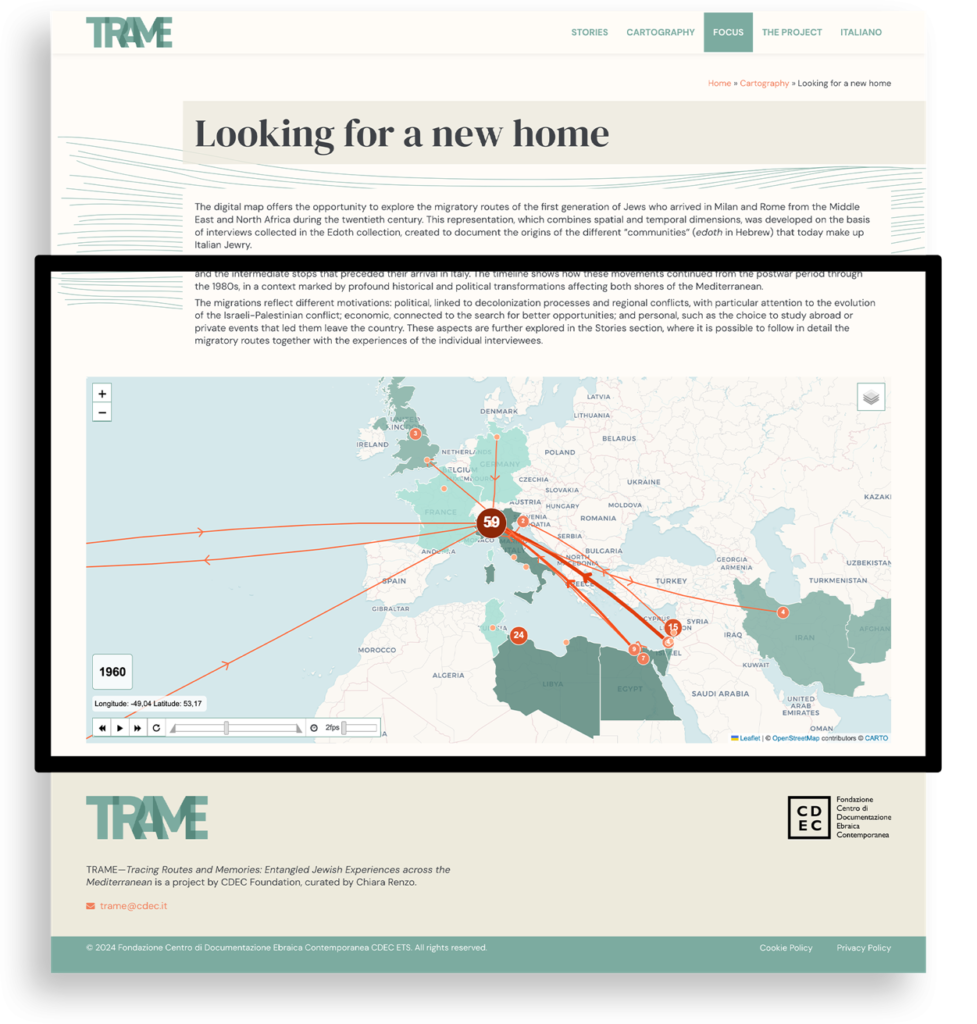
The new and slowly expanding migratory flows of Jews from the southern shores of the Mediterranean began at the end of the 1940s and marked a significant shift: Italy, which had largely functioned as a transit country in the immediate postwar period, increasingly became a destination for permanent settlement. Whereas earlier migrations to Italy had been predominantly European, these new arrivals represented a continuous movement from across the southern and eastern Mediterranean.
For some, Italy served as a temporary stop; for others, it became a new home. Although fewer migrants remained in Italy compared to other destinations such as Israel, France, or the United States, their presence was sufficient to reshape Italy’s Jewish demographic and social landscape. Indeed, the proportion of foreign-born Jews in Italy rose from just over 2% at the beginning of the twentieth century to 27% by 1975, with immigrants from North Africa and the Middle East accounting for roughly 30% of arrivals between 1945 and 1955 and nearly 70% between 1955 and 1965.9
The first major wave of Middle Eastern Jewish immigrants consisted of Iranian Jews, primarily from Tehran but descended from the Mashhad community, which had faced forced conversions in the nineteenth century. Their presence expanded in the 1960s, driven by economic motivations and reinforced by dense family networks. Most settled in Milan, where by the 1980s, the community numbered around 1,600 individuals.10 Smaller groups from Syria and Lebanon also established themselves in the city, supported by similar familial and communal ties.11 Following the Suez Crisis of 1956, about one thousand Egyptian Jews settled in Milan, while others transited through Italy before emigrating elsewhere. Predominantly from urban middle-class backgrounds and often holding European citizenships—including Italian, preserved under the capitulations regime—these families contributed significantly to the growth and consolidation of Milanese Jewry.12 The local community responded with assistance, and interestingly, the communal school system saw its enrollment double between 1950 and 1960, reflecting the growing number of students from Middle Eastern backgrounds.13
After the Six-Day War in 1967, a further migratory wave occurred when the Jewish community of Libya faced violent fueled by anti-Jewish and anti-Zionist propaganda accompanying the resurgence of the Arab-Israeli conflict. Approximately 4,000 Libyan Jews initially found temporary refuge in Italy. The Italian government, invoking historical ties with its former colony, offered provisional accommodation; however, with the rise of Muʿammar Gaddafi and the 1970 expulsion decrees, a permanent return to Libya became impossible.14 Around 1,500 Libyan Jews ultimately settled in Italy, with a significant concentration in Rome. Migration from Syria and Lebanon continued until the Yom Kippur War of 1973 and was further curtailed by the outbreak of the Lebanese Civil War in 1975. Within this broader context of twentieth-century mobility—driven by persecution, political and economic instability, and the precarious legal status of Jews in their countries of origin—Italy gradually emerged as a center of immigration, rooted in long-standing Mediterranean connections.
Representing memories
Beyond the broader geographical and historical dimensions of Jewish mobility across the Mediterranean, TRAME—through its Stories section—foregrounds the voices, emotions, and lived experiences of those who undertook these journeys. Through the platform’s advanced search interface, stories can be filtered by gender, country of origin, year of birth, reasons for migration, or family composition. This allows users to shape their own paths of exploration across both individual and collective trajectories. Central to this approach is the data portrait,15 a visual and interactive representation that condenses key biographical and migratory information for each interviewee. Each portrait combines biographical data, dates and routes of migration, and other relevant details into a single, interpretable visualization.
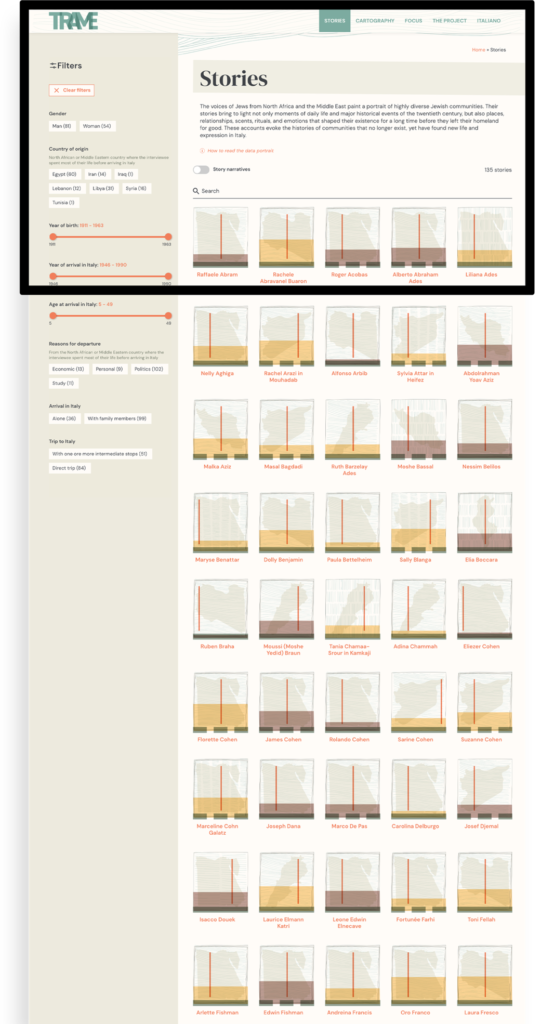
By integrating narratives with visual and interactive tools, the data portraits enable TRAME to present data not as a static record, but as an active, interpretable resource. On the search page of the Stories section, users can obtain an overview of the interviewees’ overall profile, while clicking on the individual names reveals how one person’s migration connects to larger patterns while also engaging with the intimate, personal dimensions of memory. Combined with a map that allow users to visualize the geography of the migration of each individual interviewee, the data portrait functions as a bridge between quantitative and qualitative information, providing an at-a-glance overview of a person’s trajectory.
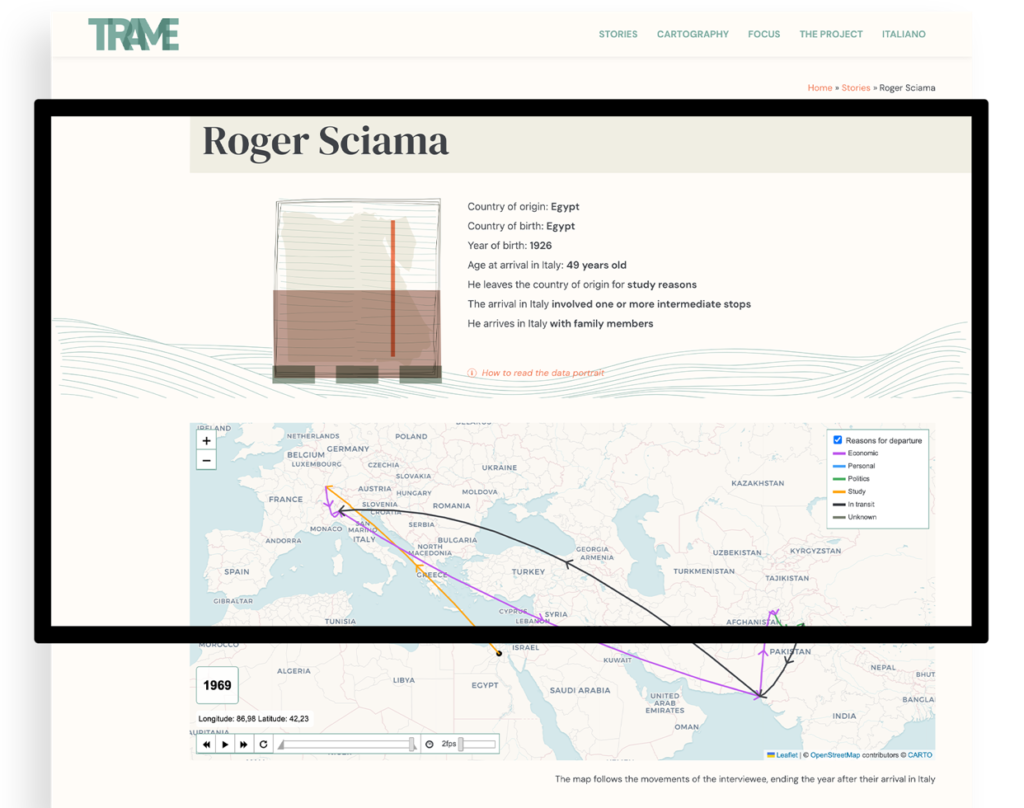
The Stories section emphasizes the plurality and complexity of identities shaped by colonial histories, cosmopolitan milieus, and transnational networks. For example, Elise Mirna Legziel, born in Benghazi in 1939, came from a Jewish family with deep Libyan roots and historical ties to the communities of Livorno and Istanbul. Her early years were marked by wartime instability, Fascist racial laws, and military clashes as Benghazi became a contested battlefield between Italian and British forces. In 1941, her family fled Libya, following the retreating British army, first to Egypt—staying in assembly camps in Alexandria and Cairo—and later to Palestine, where they lived for nine months in Tel Aviv.
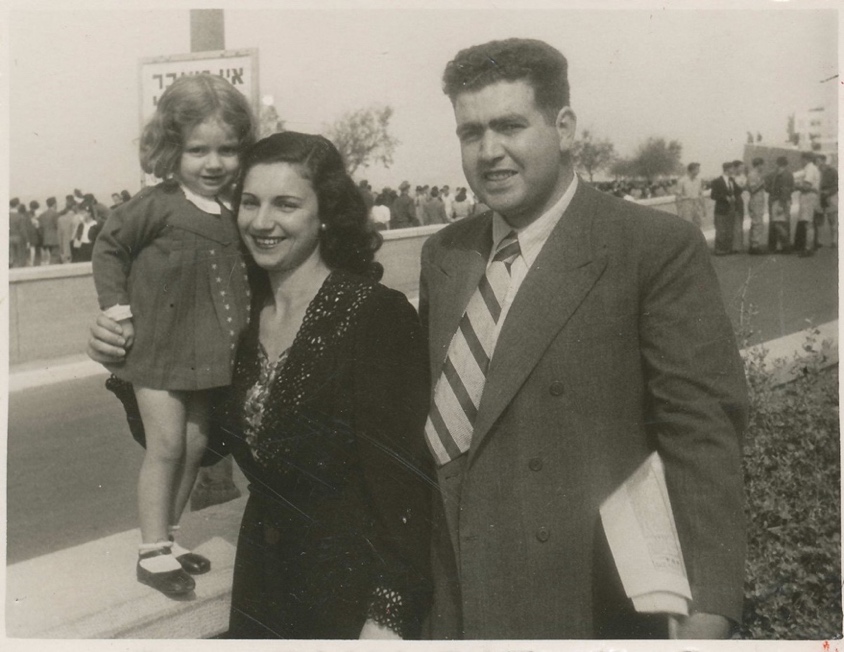
Archival photographs, such as images of Mrs. Legziel in Tel Aviv with her parents, and in the arms of a soldier from the Jewish Brigade in Benghazi, alongside audio excerpts from interviews, bring to life the experience of displacement, the reconstruction of community, and the role of international Jewish organizations like the American Jewish Joint Distribution Committee and the Jewish Agency in supporting the reconstruction of Libyan Jewish life.
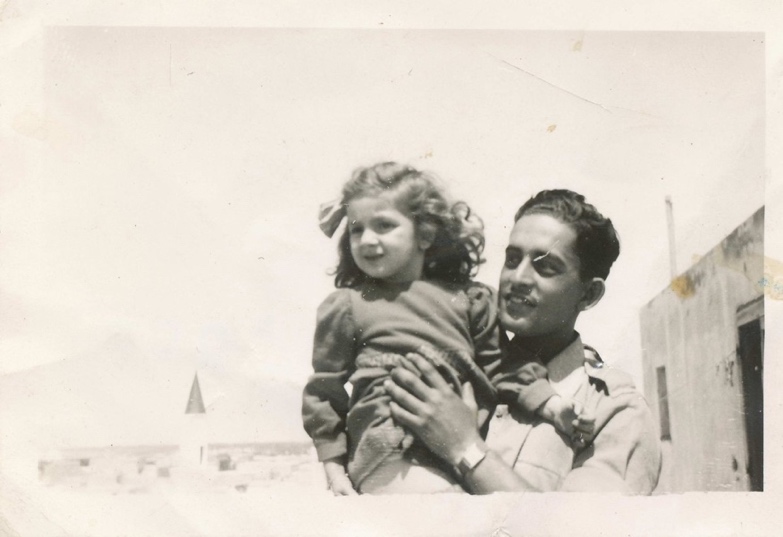
The Legziel family’s eventual return to Benghazi in 1943 and their permanent emigration to Milan in 1949 exemplify the interplay of local, regional, and transnational forces in shaping migratory decisions, such as the socio-cultural and linguistic ties the family established with Italy as the former colonial power that moved them toward the decision to immigrate to Milan. As one of the first Libyan families arriving in Milan, the Legziels witnessed the presence of the European Jewish refugees who were crowding the offices of the Milanese Jewish community in search of assistance in Via Unione 5.
Similarly, Arlette Fishman’s story illustrates the complex layering of identity and mobility in mid-twentieth-century Cairo. Born in 1926 into a family of European descent—her father Romanian, her mother Austrian—Arlette grew up in the affluent Kasr El-Nil district, absorbing European culture while actively participating in the life of local Jewish youth associations.
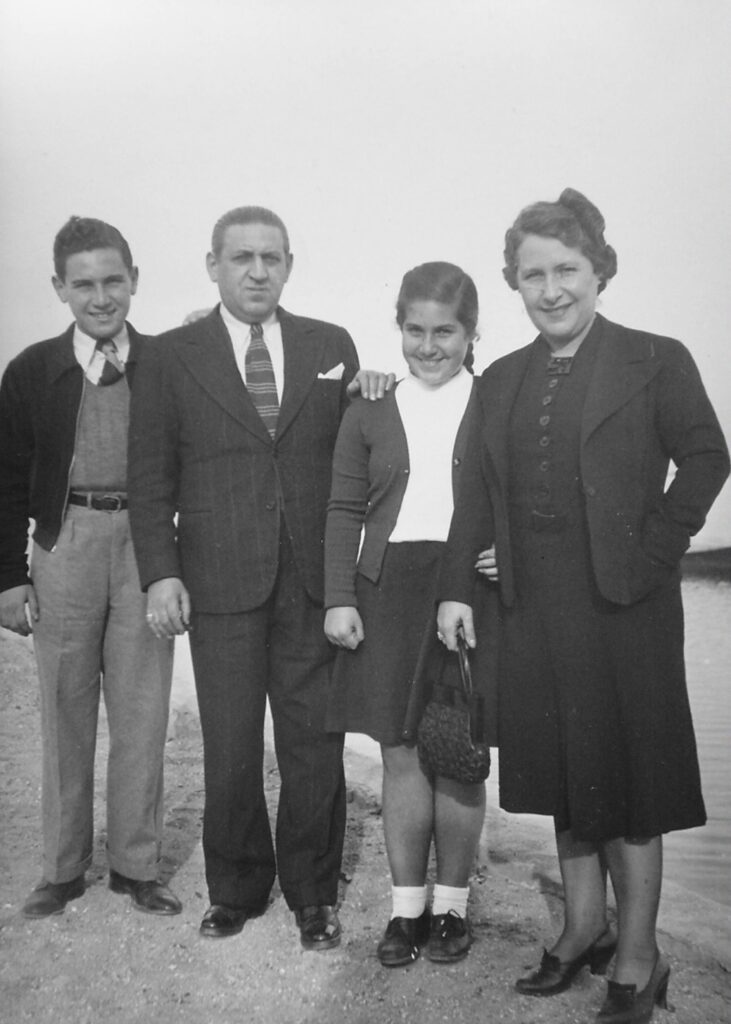
Arlette Fishman attended French, English, and American schools, eventually enrolling in the American College for Girls associated with the American University of Cairo. Alongside her brother Edwin, she joined the Maccabi sports club, which combined athletic, cultural, and Zionist education, and traveled to Palestine to experience kibbutz life and participate in Haganah activities.
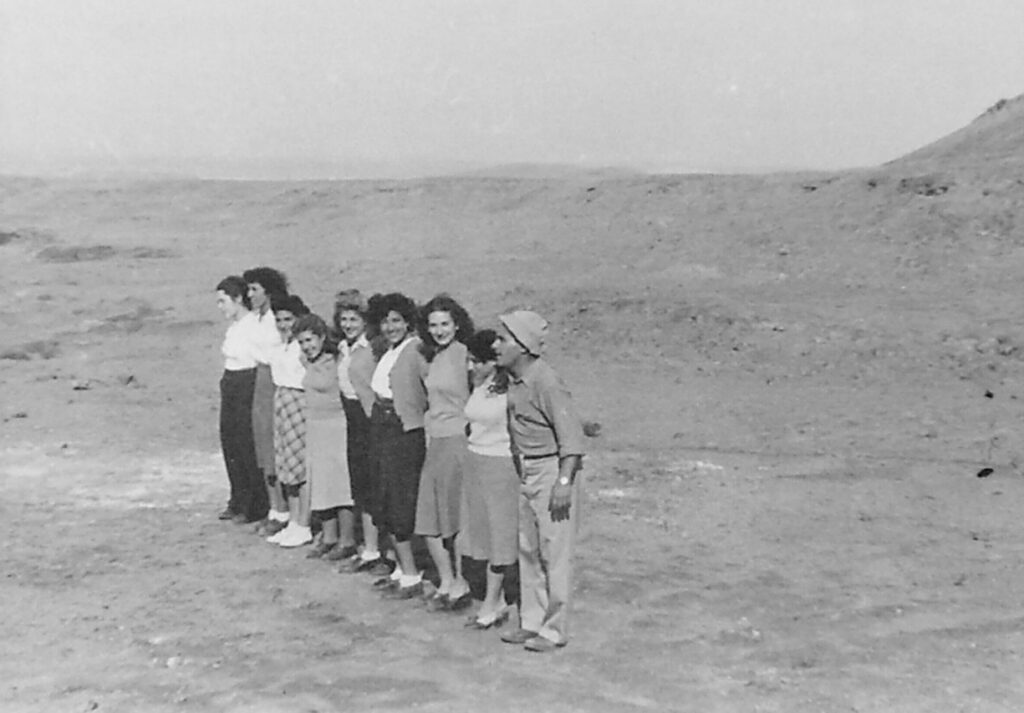
Life for Jews in Egypt was increasingly deteriorating, and many families, including the Fishmans, were beginning to consider the possibility of leaving the country. Arlette Fishman’s arrest in May 1948 and her subsequent imprisonment in the Prison des Étrangers, followed by her marriage to an Italian citizen of Ashkenazi origin, brought this discussion to the forefront; yet fear of the unknown ultimately prevailed.
Interviewer: At that time, did [your husband] Izzy think it was time to leave Egypt? Was that even considered?
Arlette Fishman: Yes, we thought about it, but it wasn’t easy because we didn’t have the means. Yes, he worked in their store, and we lived well because we were doing fine, it was a good family…but there was also a fear of leaving Egypt. We thought about going to Italy, but without any guarantees. In fact, it was very hard.16
The second time she was arrested—along with her husband—and separated from their two young children, the family’s departure from Egypt following the Suez Crisis became inevitable. The interactive map tracing her journey from Cairo to Milan, combined with photographs and oral testimony, illustrates how personal memory, political engagement, and regional conflict shaped both her migration and her process of identity formation.
Vittorio Mimun’s biography further exemplifies the layered and often precarious trajectories of North African Jews. Born in Benghazi in 1933 into a Sephardic family with roots in Cyrenaica and Jerusalem, Vittorio and his family relocated to Tripoli during World War II with special authorization from the Italian authorities, avoiding the internment camps that affected much of the Jewish community.
Interviewer: What was the camp called?
Vittorio Mimun: I lived in Benghazi until 1942. After that, with authorization from the Italian government, from the Italian governor, my father was allowed to move from Benghazi to Tripoli, while most of the Jewish community—a good part of it—was sent to concentration camps around Tripoli.
V. M.: The camp was in Yefren, a town 50 km from Tripoli. Among them were my father’s brothers and sisters. My father, however, since he represented major Italian textile companies, received an authorization document—which I think I still have—that allowed Mr. Elia Mimun and his family to move to Tripoli, avoiding the concentration camp.17
Vittorio continued his education at Italian schools in Benghazi and Tripoli and witnessed the increasing tensions and violence of 1945 and 1948. He married and continued to manage the family's business affairs in Tripoli, but the outbreak of the Six-Day War and subsequent anti-Jewish demonstrations compelled the family to emigrate to Milan permanently in 1967. Vittorio’s story highlights the complex interplay of local networks, colonial legacies, and transnational migration, emphasizing how individual memories illuminate broader historical dynamics.
Reimagining Jewish Mobility
TRAME demonstrates how digital humanities methodologies can profoundly enhance our understanding of Jewish migration histories—particularly those that have long remained marginal within traditional national or communal narratives. By combining oral history, archival research, and interactive visualization, the project moves beyond static forms of documentation toward a dynamic, relational model of historical representation. The visualization of routes, places, and biographies enables users to perceive Jewish mobility across the Mediterranean not as a linear succession of migrations, but as a complex network of entanglements shaped by political upheavals, transnational cultural ties, and individual agency.
From a historiographical perspective, TRAME contributes to two major debates. First, it broadens the geography of Italian Jewry by integrating North African and Middle Eastern experiences into the study of postwar Jewish life. Second, it engages critically with the epistemological implications of digital representation—examining how spatial and narrative interfaces can convey the diverse, fragmentary, and affective dimensions of memory. The platform’s cartographic and narrative tools not only facilitate access to sources, but also act as interpretive instruments, fostering new connections between individual life stories and the broader transformations of twentieth-century Mediterranean societies.
Equally significant is the project’s contribution to the field of public history, as it translates complex archival materials into accessible digital narratives. It invites scholars, students, and general audiences alike to actively engage with the lived and emotional dimensions of diasporic and migratory experiences. Through its methodological integration of storytelling, data visualization, and oral testimony, TRAME transforms the archive into a living space of encounter, where personal and collective histories intertwine. In doing so, it not only reweaves the fragmented threads of Jewish migration across the Mediterranean, but also underscores the centrality of digital humanities in reimagining the historiography of mobility, belonging, and identity in contemporary Italy.
1 Sergio Della Pergola, “Demografia, economia e società. Le trasformazioni della popolazione ebraica nell’Italia del Novecento,” in Ebrei nel Novecento Italiano, eds. Vittorio Bo and Mario Toscano (Genoa: Sagep, 2024), 29.
2 For a selection of studies that shed light on the varied composition of Milan’s Jewish community from demographic, anthropological, and social perspectives, see Sergio Della Pergola, “La Comunità ebraica di Milano: Tendenze socio-demografiche passate, presenti e future,” in Per ricostruire e ricostruirsi. Astorre Mayer e la rinascita ebraica tra Italia e Israele, ed. Marco Paganoni (Milan: FrancoAngeli, 2010), 59-74; Rony Hamaui, Ebrei a Milano (Bologna: Il Mulino, 2016); Piera Rossetto, “Mind the Map: Charting Unexplored Territories of In-visible Migrations from North Africa and the Middle East to Italy,” Jewish Culture and History 3, no. 2 (2022): 172-195.
3 Michele Colucci, Storia dell’immigrazione straniera in Italia: Dal 1945 ai nostri giorni (Rome: Carocci, 2018).
4 Cinzia Villani, “Milano, Via Unione 5: Un centro di accoglienza per displaced persons ebree nel secondo dopoguerra,” Studi storici 50, no. 2 (2009): 333-370.
5 Between 1948 and 1949, the Jewish Community of Milan received several requests for assistance, particularly concerning the extension of documents and residence permits submitted by “Jews from the Middle East” due to the state of war in their countries (Iraq, Syria, Lebanon and Egypt). Pratica egiziani, siriani e iracheni, 1948-1949, 109, Comunità Ebraica di Milano, b. 16, ACDEC.
6 The Hebrew term edoth means “ethnic groups” or “communities.’ For more information on the Edoth project, https://www.cdec.it/ricerca-storica-e-progetti/aree-di-ricerca/edoth-ebrei-del-mediterraneo-e-del-medio-oriente/ (accessed December 20, 2025).
7 The TRAME website was developed in collaboration with Sara Radice (graphic designer) and Fabio Sturaro (web developer), with the support of Laura Brazzo, Vice Director of the CDEC Foundation and Head of the ACDEC.
8 Following data extraction, collection, and structuring by Chiara Renzo, this section was developed in collaboration with Giovanni Pietro Vitali (historian and digital humanist), Sara Radice (graphic designer), and Fabio Sturaro (web developer), with the support of Laura Brazzo (ACDEC).
9 Sergio Della Pergola, Anatomia dell’ebraismo italiano (Assisi-Rome: Benedetto Carucci Editore, 1976), 62-67.
10 Ariane Sadjed, “Belonging from Afar: Diasporic Religiosity among the Jews of Mashhad,” Ethnic and Racial Studies 35, no. 11 (2022): 2202-2222; Sadjed, “Conversion, Identity, and Memory in Iranian-Jewish Historiography: The Jews of Mashad,” International Journal of Middle East Studies 53, no. 2 (2021): 235-251; Daniel Fishman, Il grande nascondimento (Florence: La Giuntina, 2015); Fiona Diwan, “Da Mashad, la forza della tradizione,” Il Bollettino della Comunità ebraica di Milano 5 (2014): 12-15.
11 Paul Andreson, “A Circular Society, Reconsidered: Syrian Jewish Merchant Networks after the Exodus from Aleppo,” The Copenhagen Journal of Asian Studies 41, no. 2 (2023): 33-56.
12 Paolo Zanini, “Tra due diaspore: Ebrei levantini ed egiziani in Italia (1948–1957),” Mediterranea 19 (2022): 41-68.
13 Proposta della Delibera del consiglio della comunità inerente la costruzione delle nuove scuole e del centro sociale, undated, Scuola di via Soderini (1) 1959–1970, 70, Comunità Ebraica di Milano, b. 12, ACDEC.
14 Andrea Umberto Gritti, “Enfants trouvés de la décolonisation. Gli ebrei di Libia e la cittadinanza italiana, 1948-2001,” Contemporanea 22, no. 2 (2019): 195-224; Giordano Bottecchia, “‘Radio Le Caire incitait les Libyens à se soulever, à tuer les Juifs, à chasser les Américains’: Reflets de la propagande nassérienne sur les violences de juin 1967 en Libye,” Diacronie 45, no. 1 (2021): 39-58; Piera Rossetto, Juifs de Libye. Constellations de mémoires (Arcidosso: Effigi, 2023); Chiara Renzo, “Gli ebrei di Libia nel processo di decolonizzazione (1948–1970),” Passato e presente 122 (2024): 43-60.
15 A data portrait is an artistic rendering of a specific set of biographical data, portraying the individual through information rather than physical likeness. As Judith Donath and others have theorized, such visualizations mediate between the artist’s vision, the subject’s data, and the audience’s engagement. Following this concept, the data portraits developed by Sara Radice specifically for the TRAME project provide a “portrait” of each participant based on selected data points relevant to the project’s aims.
16 Arlette Fishman, interview by Jaffa Kahan, January 30, 2012, Edoth, ACDEC.
17 Vittorio Mimun, interview by Michele Sciama, December 6, 2012, Edoth, ACDEC.
