

This issue of Quest differs from those that have preceded it. It is a special edition through which we aim to reflect upon and offer a multifaceted perspective on the seventy years of the CDEC Foundation. For this occasion, we have chosen to depart from the structure that has thus far characterized our journal. This is not a monographic issue, nor can it be considered a miscellany. Instead, we have invited collaborators of the Centro di Documentazione Ebraica Contemporanea to contribute essays and in-depth analyses that highlight some of the principal trajectories that have defined the institution’s work over the decades: the collection and enhancement of sources, the construction of research tools, the role of testimony, and the relationship between historiography, public memory, and education. The contributions gathered here do not aim to provide an exhaustive reconstruction of the institution’s entire history; rather, they seek to illuminate some of its most significant dimensions through perspectives that intertwine institutional history, historiographical reflection, and the analysis of specific archival and cultural projects.
From this perspective, we present an issue divided into three conceptual sections. The first, devoted to a historical retrospective, includes contributions by Sara Buda, Laura Brazzo, and Patrizia Baldi. The second section is dedicated to professional testimonies, presented via papers by Liliana Picciotto, Marcello Pezzetti, and Ruggero Gabbai, and concludes with an interview with Michele Sarfatti and Gadi Luzzatto Voghera, the directors of the institution over the past forty years, conducted by Guri Schwarz. Finally, a third section is devoted to current research projects conducted at the CDEC, presented in essays by Bianca Ambrosio, Riccardo Correggia, and Chiara Renzo.
This issue of Quest also introduces another innovation: its graphic design has been significantly revamped. Readers will notice improved readability and more accessible navigation across the various sections.
The Centro di Documentazione Ebraica Contemporanea was founded in Venice in 1955 and today represents one of the principal reference points for research on the history of Jews in contemporary Italy, anti-Jewish persecution during Fascism, the memory of the Holocaust in the Italian public sphere, and antisemitism. Over more than seventy years of activity, the institution has progressively expanded its scope, evolving from community-based documentary initiatives into a nationally and internationally recognized research center, engaging in archival preservation, historical research, the analysis of anti-Jewish prejudice, digital humanities, and Holocaust education. After its early years in Venice, the Center moved to Milan, first to premises within the Jewish community and later to a building on the Via Eupili that had formerly housed the Jewish school. Since 2022, it has been located at the Memoriale della Shoah within the Central Station complex, incorporating a large library that also houses the archive.
To fully understand the significance of the Center’s history, it is essential to situate it within the broader evolution of Holocaust studies in Italy.1 For a long time, the persecution of Italian Jews did not occupy a central position in national historiography. In the postwar period, public memory of the war and the Fascist dictatorship was strongly shaped by the paradigm of the Resistance, which privileged the narrative of liberation and antifascist struggle as the founding moment of the new republican democracy. Within this framework, anti-Jewish persecution often remained in the background, perceived either as a secondary episode in the history of the regime or as a reflection of Nazi policies rather than as an integral part of Italian history.
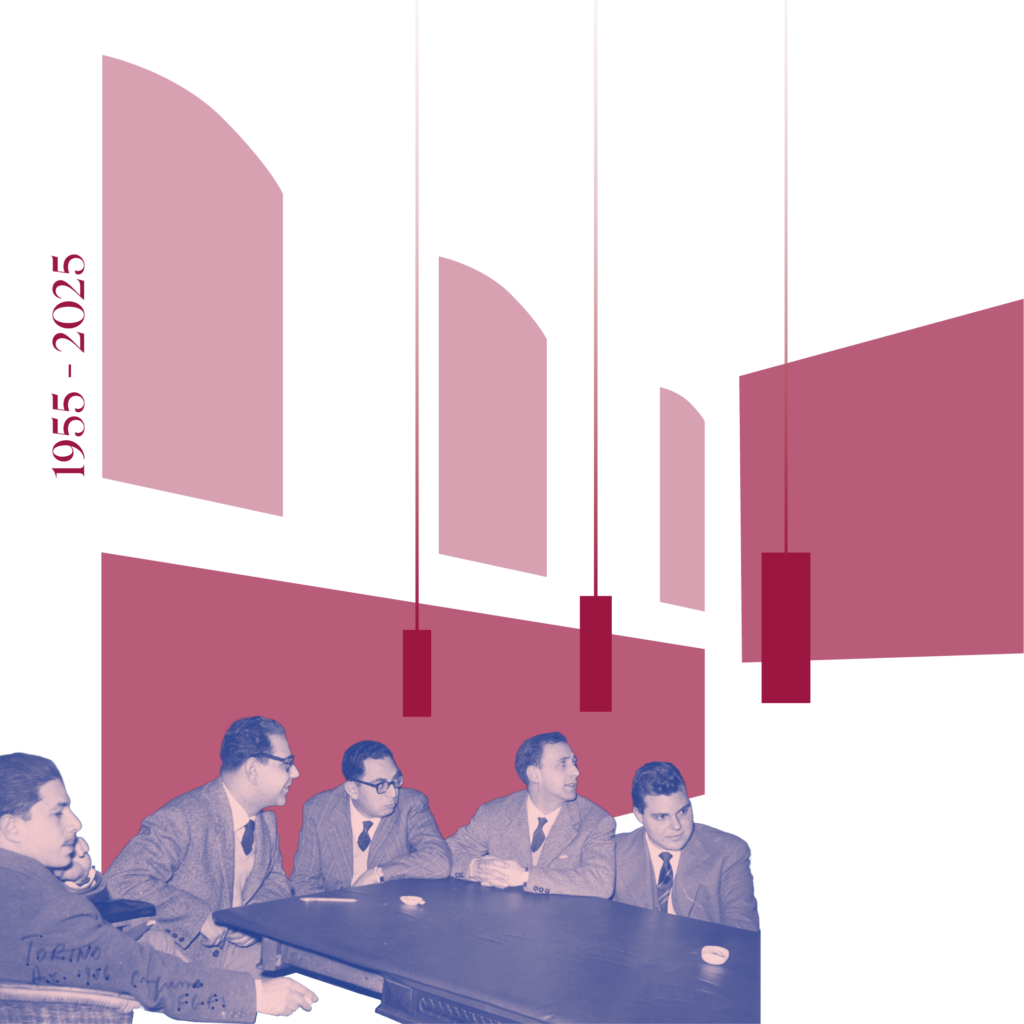
It was within this context that the initiative leading to the creation of the CDEC took shape. From the early 1950s, some members of the Federazione Giovanile Ebraica d’Italia (FGEI) felt an urgency to collect documents, testimonies, and materials relating to the persecution of Jews and their participation in the Resistance. This project formed part of a broader climate marked by the emergence of institutions and commissions dedicated to documenting the Holocaust in several European countries, as well as in Israel and the United States. The objective was not only to preserve a memory that would otherwise risk dispersal, but also to create the conditions for future historical research grounded in solid and systematically collected sources.
Sara Buda’s essay reconstructs this initial phase, analyzing the process that led to the foundation and early structuring of the Center between 1952 and 1957. She situates the birth of the institution within the dynamics of Jewish society in postwar Italy and highlights the generational and cultural tensions that characterized that context. The young promoters of the project, who had grown up under Fascism and were marked by the experience of persecution, sought new forms of civic and political participation, identifying the documentation of persecution as a field of both cultural and civic engagement.
The initial momentum toward historical documentation soon found an essential complement in another form of civic and cultural commitment: the monitoring of contemporary antisemitism. From the second half of the 1960s, figures within the Center, including Eloisa Ravenna and Adriana Goldstaub, undertook pioneering work in the systematic collection of warning signs – newspaper articles, anonymous letters, cartoons, and public speeches expressing evolving forms of anti-Jewish prejudice. In the absence of established models or a shared analytical vocabulary, this work relied on empirical and qualitative observation. As Goldstaub later recalled in an oral testimony, the aim was not merely “to preserve,” but also “to denounce and interpret.”2 In 1973, at the Fourth Conference of Progressive Judaism in Paris, Eloisa Ravenna denounced the alarming intensification of neo-Fascist antisemitism and warned against hate campaigns that were avoiding the term “Jew” and substituting it with “Zionist,” thereby constructing hostile representations, which, as she cautioned, could lay the groundwork for future crimes.
In subsequent decades, the CDEC’s activities became increasingly intertwined with the development of historical research on the Holocaust in Italy. Laura Brazzo’s essay offers a detailed reconstruction of the ways in which research initiatives were launched, beginning with collaboration with the Public Prosecutor’s Office in Dortmund, Germany, which in the early 1960s initiated legal proceedings against members of the German Security Police stationed in Verona between 1943 and 1945, who were responsible for the arrests and deportations of Jews from Italy. Through this work, the CDEC collected dozens of testimonies – particularly against SS-Sturmbannführer Friedrich Bosshammer – which have since constituted one of the primary sources used by the Center’s researchers to reconstruct the history of persecution in Italy.
From the 1970s, and especially the 1980s, the persecution of Jews began to receive increasing attention from historians.3 The opening of new archives, the renewal of historiography on Fascism, and the emergence of a broader international debate on the Holocaust contributed to stimulating new research and reshaping established interpretations. Alongside its archival dimension, this issue of Quest also addresses the themes of testimony and memory. Since the 1980s, the CDEC has progressively established itself not only as a repository of sources, but also as a center for historiographical production.4 Research promoted by the institution has helped clarify many aspects of anti-Jewish persecution in Italy, from the racial laws of 1938 to the deportations following the German occupation in 1943. At the same time, the collection of documentation has enabled the creation of one of the most important archives dedicated to the history of Italian Jews in the twentieth century.
In recent decades, oral history and the collection of audiovisual testimonies have assumed an increasingly central role in Holocaust studies, transforming the ways in which it is narrated and transmitted. The contribution by Marcello Pezzetti and Ruggero Gabbai reconstructs the creation of the Archivio della Memoria (“Archive of Memory”) and the project to collect filmed testimonies of survivors. Through the experience of creating the documentary film Memoria,5 the authors demonstrate how audiovisual testimony has become a fundamental tool for transmitting the memory of the Shoah to younger generations.
The connection between historical research and the analysis of the present became dramatically evident in 1982, a year that marked a crucial turning point. In a climate exacerbated by the war in Lebanon, the delegitimization of Israel converged with a form of political antisemitism that directly targeted Italian Jews, identifying them as collectively responsible. On October 4, a bomb exploded outside the CDEC headquarters on the Via Eupili, causing significant damage; a few days later, on October 9, an attack by a Palestinian commando on the synagogue in Rome resulted in the death of a child, Stefano Gaj Taché, and injuries to thirty-seven people. For the first time since the postwar period, Italian Jews were the target of direct political violence on national soil.6 These events provided the decisive impetus for the establishment of a dedicated office for the study and monitoring of anti-Jewish hostility, later known as the Osservatorio Antisemitismo (Observatory on Antisemitism). It was no longer sufficient to collect material; it became necessary to analyze, understand, and explain it. From the trauma of 1982 emerged a new phase, marked by the creation of a database, the definition of analytical categories (such as denialism, economic stereotypes, and the delegitimization of Israel), and conceptual harmonization with international research centers, transforming an empirical archive into a genuine analytical tool. Since the early 2000s, the Observatory has addressed the challenges posed by the digital revolution and new vectors of hate. Over the past fifteen years, analysis has extended to social media, where antisemitism manifests in hybrid, viral, and sometimes mimetic forms, as seen in the trivialization of the Shoah by very young users. Attention has also focused on the intersectional nature of hate, as demonstrated by coordinated campaigns of antisemitism, ageism, and misogyny targeting public figures such as Senator Liliana Segre. In this context, the Observatory has combined academic rigor with civic engagement, providing analytical support to parliamentary commissions – such as the one established by Segre in 2018 – and contributing significantly to the drafting of the National Strategy to Combat Antisemitism, which was adopted by the Italian government in 2021 and again in 2025. The terrorist attack of 7 October 2023 and the subsequent resurgence of antisemitism in Europe have further confirmed the necessity of this work, which now benefits from a robust network of collaborations with European observatories and projects aimed at building a comparative framework for memory and the monitoring of hate at a continental level.
Reflection on the relationship between archives, sources, and historical research constitutes one of the guiding threads of this issue. Riccardo Abram Correggia’s contribution, devoted to the archival collections of the socialist-Zionist Hashomer Hatzair youth movement in Italy, offers a significant example of the research potential opened by new archival acquisitions. Through the analysis of selected materials – including periodicals, internal documents, photographs, and testimonies – this article reconstructs the formation of the collection and highlights its value for the study of Jewish youth life in postwar Italy.
Historiographical reflection is further deepened in the essay by Liliana Picciotto, which retraces her research trajectory – entirely developed within the CDEC – on the persecution of Jews in Italy. Beginning with her pioneering work Il libro della memoria,7 she highlights the methodological transformations that have shaped this field and the progressive expansion of research perspectives, which now encompass not only the dynamics of persecution, but also strategies of survival, networks of solidarity, and various forms of Jewish resistance.
Another central dimension of the CDEC’s activity concerns its educational commitment. From its origins, the institution has combined historical research with extensive outreach and training initiatives aimed at schools and the broader public. Patrizia Baldi’s contribution analyzes the development of these initiatives over the decades, showing how Holocaust education has become one of the Center’s primary areas of intervention. Through educational programs, teacher seminars, and student-oriented projects, the CDEC has made a significant contribution to the dissemination of historical knowledge about anti-Jewish persecution in Italy.
This volume offers two further contributions. Bianca Ambrosio opens a particularly innovative perspective on the contemporary use of historical archives. The project in question, which is being carried out in Milan’s San Vittore prison, involves inmates in activities engaging with testimonies of individuals who were detained in the same institution during the Second World War. This initiative demonstrates how archival and testimonial heritage can be employed in non-conventional educational contexts, fostering critical reflections on history, individual responsibility, and the dynamics of persecution. Finally, Guri Schwarz presents a comprehensive interview with Michele Sarfatti – who directed the CDEC from the mid-1980s to 2016 – and the undersigned, the Center’s current director. This operational perspective offers insights into the cultural, political, and managerial challenges the CDEC has faced in recent decades.
Taken together, the essays collected here offer a plural perspective on an institution that has played a fundamental role in the development of studies on Jews in contemporary Italy. From the collection of the first postwar testimonies to the construction of digital archives, from historical research to educational and cultural activities, and the ongoing study of antisemitism, the history of the CDEC reflects broader transformations in the relationship between history, memory, and society in both the Italian and European contexts.
Gadi Luzzatto Voghera, CDEC Director
